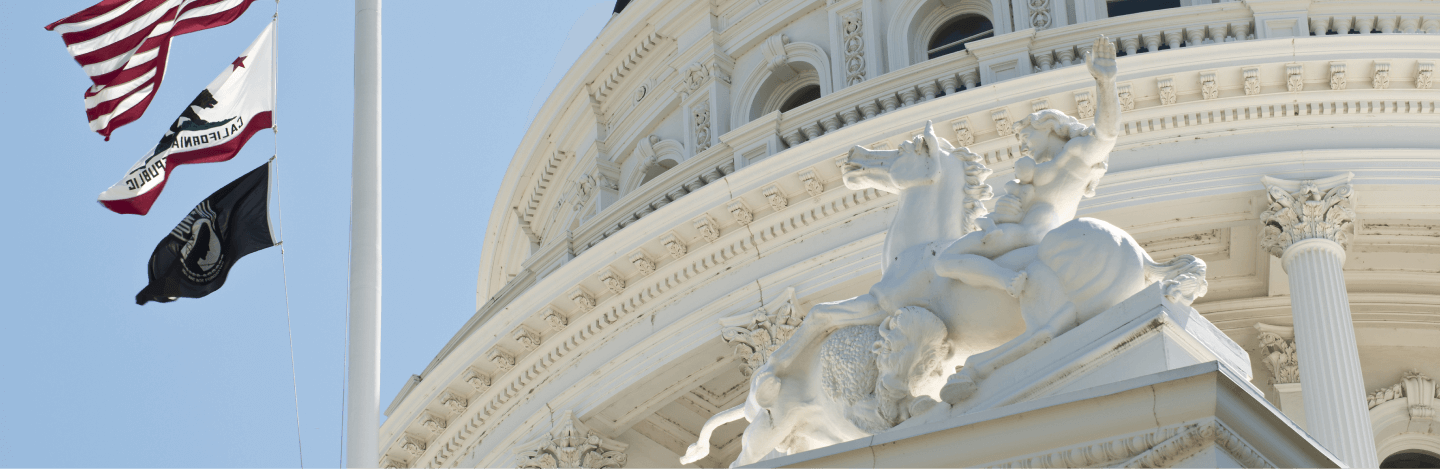
Adult Essay Contest – 1st Place

Golden Gifts
By Sarah Craven – Cabin John, Maryland

Golden apples falling at your feet. This was a phrase my father often used to remind me of the many gifts and privileges in my life. Lately, I have reinterpreted his adage through the lens of golden plumeria —the tender and fragrant blossoms of the tropics.

In 1969, my parents moved our family from Maryland to Honolulu. My mother famously told my father she was willing to live there for “one year—and not a day more.” Yet, by the following year, they were signing the deed to a house on Wa’a Street—the Hawaiian word for canoe. The house, small and open-air, sat on the curve of the street under a rainbow shower tree shading the carport. A prodigious mango tree stood sentry at the corner of the lot, and the back garden brimmed with golden plumeria trees. Neighbors often knocked on the door, asking for a few ripe mangos or plumeria blossoms to string into leis.

We made our leis with long wire needles from Long’s Drug Store, threading them with dental floss. A  plumeria lei could welcome a visitor, mark a birthday, or celebrate a graduation. Even a single plumeria tucked behind the ear carried meaning—on the right if you were single, on the left if you were committed. The plumeria’s delicate fragrance and fleeting beauty became part of the rhythm of our lives.

This spring, my mom, now 99, reluctantly moved from her beloved home to The Ivy, a senior living community a short drive away. The irony of the name Ivy – a plant non-indigenous to  Hawaii – did not go unnoticed. Her new studio apartment overlooks a serene garden filled with fragrant plumeria trees. In the early days of her transition, she sighed wistfully, noting, “They are pretty trees but they’re not MY trees.”

Recently, a Wa’a Street neighbor texted, upset about plumeria blossoms from my mother’s trees drifting into her yard. I promised to trim the tree but couldn’t resist sharing how, years ago, those blossoms were treasures, not troubles. She wasn’t swayed. Perhaps I’ll send her a lei needle.

Two plumeria plants thrive in my Bethesda home, once mere sticks hastily bought from the Honolulu airport gift shop on a trip back. To my surprise, they blossomed, offering three or four flowers at a time.  I tenderly care for them, floating the infrequent but cherished blossoms in a small dish of water so their gentle fragrance seasons my home with memories of Honolulu.

Some things change—our homes, our stages of life—but some endure, like plumeria blossoms, quietly falling, a testament to beauty’s persistence. These small, simple treasures have been a constant through decades of change, bearing silent witness to our joys and sorrows, milestones and departures. 

My father’s wisdom lingers: golden blessings abound if we’re willing to notice. Sometimes, they fall at our feet, waiting to be gathered. Life, like the plumeria, offers fleeting beauty and connection. We must pause to honor them, weaving a lei of memories, an offering of gratitude.


Adult Essay Contest – 2nd Place

Rage, Rage Against the Dying of the Light
By Kathy Wei – Bethesda, Maryland

Summertime used to feel like magic, where the air itself shimmered with excitement. Anything was possible. You could feel it in the smell of dew through an old screen door, the sound of tattered sneakers kicking up dirt in the yard, the taste of a sticky popsicle as it melted down your arm. It was humid enough that just standing still caused a thin layer of sweat to settle over your skin. But rather than feeling oppressive, the heat was pure freedom.

Maybe it was because school was out for months, which at the time felt like forever. Maybe it was because Mom and Dad were busy, so the kids were left to ourselves. Maybe it was because there was nothing to do inside, and so much to see outside. Whatever it was, the magic was strongest at night. The dark of summertime is soft, like a velvet blanket. It nestles quietly overtop everything it touches, dulling each of your senses. Your eyes are muffled by a deep orchid tint, your ears dulled by the constant chatter of grasshoppers, your body slowed through the thick air that clings to your every movement. Summer nights are sluggish. The harder you try to fight it, the more the heat weighs you down. And when you are too tired to look forward and keep going, you lie down and look up. 

When the sun dips under the horizon, only the faint glow of the sky lights your way. The concrete sidewalk fades beneath your feet. The road you follow instead is above your head, a vast plain broken into paths by the silhouettes of the treetops. It is under this cover of darkness that a society emerges. The neighborhood children meet after dinner under the gnarled old tree in the apartment complex’s courtyard. James picks the first game, because he is the oldest and the tallest. They race each other up and down the road until it no longer holds their interest. Panting, they lie on the grass and begin to trade their treasures. Three acorns go for a smooth pebble. A forked stick for a bouquet of dandelions. Two children argue angrily if a noisy brown toad is worth four or five muddy crystals fished from the creek. All of a sudden, they stop. The real prize has arrived.

Twinkling lights appear in front of their eyes, floating lazily in meandering loops. The stars have come to down to play. The children swiftly swish their jars through the air, lids already sloppily poked to allow their captives to breathe. They marvel as they do the impossible, holding pure light in their hands. Long ago, people looked to the night sky and read patterns in the millions of stars. By the time we were young, those stars had all but disappeared from our view. But it didn’t matter to us, because had stars we could touch. No one thought to ask: what do we do when the fireflies are gone too? 


Adult Essay Contest – 3rd Place

Object Permanence
By Lisa Park – Fairfax, Virginia

My daughter used to wave at me from the school bus window and blow me kisses. Now, she gives me a hug and traverses the big steps onto the bus. I follow her shadowy outline as she finds a seat with a friend. I wave to the back of her head. 

She used to love peek-a-boo. I covered my face with her favorite blanket, Where’s mama? then dropped the blanket. Her face—all chub and cheek back then—erupted into an elfin cackle. I did it again. Cackle. The best sound. 

She had developed object permanence. When babies realize that objects out of sight still exist, they search in expectation. She anticipated my return.

On Sunday nights, an ache would begin somewhere between my heart and head. I couldn’t localize it; it was nowhere anatomic. I kept busy, kept going. I packed milk for the next day. I stuffed my work bag with breast pump and clean bottles. By Monday morning, as we stepped through the daycare doors, I held her tightly to my chest, inhaling her baby shampoo and milk scent. She’ll be okay, the teachers said. You can go now.

I wonder how long my daughter watched my outline through the door. I imagined her looking and looking, crying at this game of peek-a-boo gone wrong. 

Her teachers sent me pictures. My daughter finger painting, red paint crossing over paper margins to color the table, my daughter sitting, dimple-thighed on the grass; in each picture, she was attached to another being—the teacher’s arms around her, the teacher’s hand holding her hand. I held her pictures while I sat in my office pumping milk for her. 

When I picked her up after work, our bodies relaxed into each other. Our brains had mastered object permanence, but our bodies had not been sure. 

The way to make separations less painful, they say, is to make sure your child knows that you will come back.  Practice the returns. The moment when the blanket drops, and you both are there, face-to-face.

My third grader sits in the back of the bus with the big kids. As her confidence grows, my trust in the world wanes. She has object permanence, but I waver. I can’t forget an image of an elementary school-age girl crying in the window of a bus, after a school shooting, being driven somewhere to reunite with her parents. I don’t even remember which school shooting. The world is impermanent. So are people.

Because I’m the parent, I keep these thoughts to myself. I hold them back when I would rather hold onto her. I stay steady and calm so she stays steady and calm. The tense muscles in my neck tell the truth, but only to me.

The best part of the day is when she returns from school. The ache relents. The muscles relax. Her delighted face, inches from my delighted face. When I’m not sure what to do, I remember the returns. 


Adult Essay Contest – Honorable Mention

On Exile
By Kyi May Kaung – Chevy Chase, Maryland

There was this friend of mine, who sent me a masthead from a journal on Immigration, suggesting I write for it.  

I replied, “I am not at immigrant.  I did not come to immigrate.  I was not emigrating.  It would take too much energy to try and prove I am an immigrant.”

I didn’t write anything then.  

I came on a Fulbright Fellowship for a doctoral program at the University of Pennsylvania.  Fulbright and the Burmese military dictatorship decided my field should be Transportation Economics, but by the time I finished my coursework, I found that Transportation Economics was not the answer for Burma.  

Specifically, I saw a report from Fort Bragg that showed the surface of the Myitkyina Airport, probably from satellite photography.

In Burma you could not study Political Science.  You could only study Marxism, and there were only two textbooks.  I started reading Pol. Sci. on my own in van Pelt Library.   I discussed things with the professors.  One who always wore blue jeans to class, said, “You’re already at Penn, which is a good place to be, so I suggest you look around for a political scientist to be your dissertation supervisor.”   I found the late Henry Teune.  I also found my dissertation chair Herbert Levine, a Russia expert.

By the time I finished my Comprehensive Exams, the 1988 mass pro-democracy demonstrations took place in Burma.  The clampdown started on September 18th.

Fulbright insisted their agreement was with the Burmese Government, and pulled our scholarships.  My childhood friend would later tell my sister, she did not finish at Wharton because she was disturbed by me calling her on the phone and discussing my personal problems.

As I remember it, I only called her two times, during our asylum applications.  Penn found us a lawyer.

So I am an asylee, a political refugee, who sought refuge and asylum.

In one fell swoop, I lost continent, country, city, job, marriage in Burma.

It’s not a disaster, as Elizabeth Bishop wrote.  To apply for asylum, I had to prove that I in particular, would be in danger.  

It was not enough to say the whole country was in turmoil.

I am not “pure Burman,” I am third generation Sino-Burmese-Mon, as in Mon-Khmer.  My friend was Burmese-Muslim, but she was “more Burmese” than I.  She spoke of her grandmother who kept her hair in a sadone, on top of her head.  She wore her longyi (sarong) all the time on the unsafe Penn campus, where a police officer came and briefed us to wear clothes and shoes we could run in.  We also attended sessions on date rape.

I don’t know the immigration rules for Burmese right now when there is an all-out civil – (uncivil) war, going on, the junta bombing towns and villages daily.

Burmese diaspora, Burmese massacres are accepted terms now, like Tamil Massacre, Rohingya Genocide, Cambodian Genocide.

Nabokov wrote in Speak Memory, that his mother did not need anything because she remembered everything.


Adult Essay Contest – Honorable Mention

Handkerchief
By Celina Santana – Bethesda, Maryland

The contents of my grandfather’s ninety-eight-year-old life are sorted into the following piles: 

  1. Keep
  2. Scrap metal
  3. Recyclable
  4. Salvageable parts
  5. Flammable and better off flamed
  6. Worthy of auction
  7. Unidentifiable and to be snuck off the premises while he sleeps
  8. Useable and likely wanted by neighbors
  9. Objects he swears are worth a fortune that we’ll dispose after his death

#

I balance on the balls of my teenage feet as the wagon bumps and jerks behind the tractor. My jeans have dirt pods for knees. The tails of my brother’s old church shirt are tied below my belly button; it’s rolled-up sleeves are bulky rings around my wrists.   

The baler’s hydraulic arms pack eighty pounds of alfalfa and binds it in string. It spits out one, then a second, and my grandfather reaches forward and plunges steel hooks into each. It smells of spiced grass and honeysuckle. He swings both bales by their fresh cut bellies and tosses them to the back of the wagon, casting a rainbow of sweat, purple lucerne, field dust, and strain. 

#

Molasses brown juice diluted thin with saliva streams through week-thick stubble. To see the iron-proud chin of my grandfather stained and overgrown is the first understanding that time lacks compassion. How insignificant the decision might seem to anyone in the regular pace of the world. But here, in between thick West Virginia walls, the choice to blot again a handkerchief against his chin, or not, is profound. Both the dribble and the remedy are an assault on the long-earned pride of a man that once built steel structures to scrape the sky. I cannot suggest he unstuff his lip of the loose leaves that grow from his hand-tended land: it is all the man has left to tend. Fledging leaves of tobacco yearn for water, refuge, and time the way his children and grandchildren no longer do.

Yeah right, I say to the thick breeze in his wake. Moving away means a fresh start. I pull the tie out of my hair and let it fall over my shoulders. It feels heavy in the afternoon heat, shimmering with the glare of the sun. I get a clean slate.


Adult Essay Contest – Honorable Mention

Are You My Mother?
By Lindsey Wray – Arlington, Virginia

Are you my mother?

You, who taught me how to sound out the short “a” for “apple,” but who could no longer read the word “apple.” You, who didn’t know an apple is the sweet and crispy fruit you used to slice up for my little fingers to handle.

Are you my mother?

You, who planned birthday parties that were the envy of my friends — custom-made games and cakes with homemade frosting — but who no longer knew when either of us was born.

Are you my mother?

You, who adeptly sewed Halloween costumes and school play outfits, and who helped me learn to sew for school projects. But you, who didn’t understand what to do with a needle and thread.

Are you my mother?

You, who read books to me in bed, on the couch, at the kitchen table, again and again, and then listened when I read them to you. You, who later couldn’t make sense of the blur of words spoken to you.

Are you my mother?

In the children’s book “Are You My Mother?” by P.D. Eastman, a baby bird hatches while his mother is away finding food. The bird leaves its nest and begins exploring the wide world in search of his mother. He asks a dog, a cow, and even a bulldozer: “Are you my mother?” He’s not sure how to recognize her.

“I have to find my mother!” the bird exclaims at one point. “But where? Where is she? Where could she be?”

At the end of my mother’s journey with Alzheimer’s disease, I wasn’t sure where she was some days. I recognized her less and less, but still more than she recognized me. Where is she? Where could she be? Alzheimer’s erased her from the pages of her own book, yanking her out of the nest she worked so hard to build. 

The little bird in Eastman’s book remains determined to locate his mother: “I have to find her,” he says. “I will. I WILL!”

As my mother entered her final decline, finding her got more difficult. Sometimes I’d see her searching, too — leaning down, seeming to eye an item just beyond her gaze. Looking for something lost, perhaps, or for something familiar. 

Yes, yes, you are my mother. I have found you. And I think what you were looking for was a way to fly.


For more information on the Local Writer’s Showcase, please visit https://www.bethesda.org/bethesda/localwriters


High School Essay Contest – 1st Place

The Painting in the Mirror
By Logan Moran – Bethesda-Chevy Chase High School

As I step into the powder room adjacent to my attic bedroom, I take in my surroundings. The afternoon light streams through the stained glass window, dappling the walls with color. The messy array of pastes, sprays, and brushes are strewn across the surfaces, each exactly where I left them. I turn on the faucet, waiting for the water to warm. As it washes over my face, I feel refreshed, and when I’m done, I reach for my towel to carefully pat my face dry. I stand up, and when the towel drops, I catch a glimpse of the painting in the mirror. 

Some days it’s a Picasso, and I see not a unified person but rather a combination of different features, both feminine and masculine.

I see the wide “cow eyes,” as my sister used to call them when she wanted to put me down. Attached to those are the long and dark eyelashes that my ophthalmologist used to say she was jealous of. I poke and prod at my cheeks as I try to figure out where fat ends and bone begins. They are rounder than I’d like—a still lingering reminder of my childhood and the first part of my adolescence, when estrogen ran through my veins. 

The testosterone brought with it the thick eyebrows of my mother’s side and the sharper nose of my fathers side. I see the adam’s apple which accompanied the long-awaited voice drop. I see what could be the beginnings of a beard. 

 If I stare long enough, my features start to distort. I see what I hope to be my future, and I see the girl I used to be. I can see everything except the real face that stares back at me. I know these features create a coherent face, one that’s perceived by others just as I perceive theirs, but on Picasso days I can’t imagine it. Try though I may, I can’t combine these features into a person. They exist individually, reminding me of the progress I’ve made and the things I will never be able to paint over.

The pain has eased, as the testosterone replaced the estrogen. Now most days are Van Gogh days—aesthetically pleasing but never perfectly smooth. 

Painter and painted, with each injection and exercise I make contact with the canvas once again, but the paint is not without its flaws. The acne that plagued my face for two years has left scars. A side effect and therefore a constant reminder of my transition. I didn’t have to take the testosterone. I was choosing to do this to myself. Still, it was the right decision. 

Each brush stroke builds upon the previous layer until the canvas is transformed. Each stroke will never be as smooth and the feeling never as warm as a Rembrandt or Vermeer. Nevertheless I continue to paint, content with the beauty found in imperfection.  


High School Essay Contest – 2nd Place

What Silence Held
By Caroline Easley – Walt Whitman High School

My siblings and I gathered at the wooden dining table in our grandparents’ kitchen. The soft beeps of various appliances blended with creaks from Grams’ well-worn wooden table. She placed a few paper plates at each of our placemats while Grandaddy prepared bread rolls. Each roll was carefully buttered––eight in total, so each of us could have two. His quiet presence anchored the room. Now, I realize how much silence can hide.

The excitement among my siblings and me was palpable. Nothing was more thrilling than spending the night at our grandparent’s. We could barely contain ourselves, waiting to dig into the meal in front of us. But we held back until Grams and Granddaddy joined us. Once they sat down, the scene at the table erupted: mouths were full, and manners were out the window. The scent of warm bread and the sound of laughter saturated my grandparents’  kitchen.

But even the warmest kitchens grow cold.

***

The next time we gathered, a seat was missing. The room’s warmth dissolved into a suffocating chill. The lines on Grams’ face had hardened. Grandaddy had taken his own life. 

A nebulous dread clouded the memories of our time together. The snow globe that once danced with snowflakes had cracked. The fond memories of my childhood drained slowly––seeping into my hands, and slipping through my fingers. I tried to patch the crack, but the effort only delayed the inevitable. The memories fell, scattering like shattered glass across the cold tile floor.

Now, I see Grandaddy at the dining table again, his eyes fixed on the meal before him. What I once thought of as quiet shyness has the weight of something heavier, something unspoken. He excuses himself from the table to rest in bed. 

I picture him: his tired eyes, the dark shadow looming behind him. I wish I could go back, stand beside him, and fight the shadow myself––tear it away, just for a moment. At the time, I didn’t know its weight, suspended by my ignorance. Now, that burden has fallen on me, waking me too late to change anything. 

I see him battling the shadow. The pill organizer, each compartment containing capsules of hope––each pill a fragile promise, an ephemeral victory against ceaseless blows. 

Eventually, Grandaddy’s armor grew rusted and worn. The blows became too much to endure.

I do not fault his surrender, but wish his opponent had been weaker. Only after years of reflection do I begin to grasp the complexities of his struggle. Now, I carry his memory not as a broken snow globe, but as a reminder of the strength it takes to battle what we can not see. I remind myself to carry light, even when shadows remain invisible.


High School Essay Contest – 3rd Place

The Intricate Process of Pottery Production
By Michaela Levy – Winston Churchill High School

Like they have countless times before, my hands push against the clay on the wheel with purpose as I apply the force needed to drive a boulder. This is the first step, centering the clay. Even after finding the perfect middle, the structure is precarious. If I’m not meticulous with my hands, the entire piece will be thrown off center, asymmetrical, imperfect, but everything else is still undetermined. What will it be? A cup? Maybe a vase?  The spontaneous, ever-changing nature of clay makes the creation process so interesting.

When I was younger, I perceived myself as off-centered. My mother is single, I have no father, and I’m adopted from China. Life felt normal until I found out I had a unique family. I remember sharing my story with classmates for the first time. Their faces twisted into hesitant expressions, and one said my mother wasn’t my real mother because we weren’t bonded by blood. My mom was real; I came home to her each day, she made warm food and sang songs to me. For years, this comment stuck like a leech that I couldn’t shake off, and deeply affected how I believed others perceived me.  

In creating pottery, a wall can get too thin to continue throwing. At times, I have been hesitant to continue a piece out of fear that the structure could collapse. Fearing my own collapse in middle school, I became reserved about sharing my family origins, afraid to again feel vulnerable. Even after making friends with Chinese kids, I felt different, divided by our lack of shared experiences. Surrounded by people who looked just like me, I still felt like my walls would crumble at any moment.

Even after throwing the walls for height, the clay must be formed into a shape. To morph it into what it will become. Stepping into my first high school art class, the huge bucket of clay caught my attention. Some students gagged at the feeling and smell of the wet mud on their hands, but I was captivated by the potential of the sludge. I took in every moment as if I were consuming water after being deprived for days in the desert. 

When drawing first lured me into the artistic world, I would cover my work with my arm like a wall to protect it from judgment. In my high school setting, however, I couldn’t stop showing off my creations because I was surrounded by people who had the same passion for art. The newfound sense of belonging in my school’s art community sparked a flourishing bud of self-acceptance toward my adoption. Our shared love of art held us together like a bandage, slowly healing my definition of what belonging means. 

The final step in completing a ceramics piece before placing it into the kiln is to trim it. I’m still “trimming” my definition of belonging, and while I believe it will be ever-changing, with each refinement I come closer to discovering who I’ll become.  


High School Essay Contest – Honorable Mention

Lucky Number Make a Wish
By Marin Brow – The Potomac School

I find myself praying at 11:11 each day for a better me. I find myself pleading for signs, depending on a god I swear I don’t believe in. The unconscious repetition soothes me. It’s not planned, nor do I take any measures to stop it. Every day, I find myself succumbing to the wits of a higher being, burning for a heaven I ostracize myself from. 

I go to church almost every weekend, never of my own accord, but I go nonetheless. I take this time to search for myself; I evaluate if I have been flawless. I’ll never be. I find that I’ll never live up to the version God made for me. I find myself in need of salvation, yet I will never accept it. I find myself relying on a welcome I’ll never trust. 

I was confirmed two years ago. A couple of days beforehand I worked myself up to finally denounce this God to my mother. But I got no response, only more questions left unanswered. Confirmation was a game to me; toying with the idea I could be accepted, burned by the realization I was dreaming. A dream of running naked through the gardens with Adam by my side. Life is what I make of it, yet no matter if I choose hunger or satisfaction, the ending never changes. 

Death is a reverie, a cap to an overflowing bottle, pushing to contain a never-ending flow; the desire to be known. I know how God comforts, it’s not a coincidence we are suddenly church regulars once my aunt and grandfather died. I just don’t understand it. It’s an illusion of liberty, you are always tied down – the only difference being the choice of shackles. I am restrained by my naiveties and my fault in understanding. I need to die knowing my mere existence doesn’t put me on a speed train to hell. I need to live knowing my prayers are more than what I believe in. I need to look back on the past and think. Why did God make me like this?

I was ten when I knew I was gay. I was nine when I knew this entrusted me to evil. At no point was I ever allowed to live with myself without the wary shadow of hell. The stark and waiting outline of my sins. A candle can be reformed once burned, do I get the same mercy?

 I lay at night staring at my clock, itching for it to turn to 11:11. The one time I can rely on a peripheral thought. One where I don’t care that God knows me; only that he hears me. And as another year ticks by, the first sermon of January meets me, singing an alarm to me. Wake up. “One must bear fruit worth repenting in order to be forgiven.” But I don’t want to be forgiven, I want to be accepted.


High School Essay Contest – Honorable Mention

Familiar Scent
By Eleham Salo – Bethesda-Chevy Chase High School

Oneness between the cook and the ingredients can be recognized by a simple scent.

Nine year old me would wear goggles when watching my mother cut onions; her hands moving with delicacy from years of experience, chopping each part completely unfazed. That effortlessness ingrained itself into me, as I ultimately dropped the need for accessories and upheld discipline against the strength that onions brought to my eyes. Though our eyes might’ve stung, we never complained.

It fills the air as we cook, so we close our closet doors tightly and keep the windows open—a quiet ritual passed down to keep the strong scents from settling into our clothes and haunting our rooms. Regardless of our efforts, the scent lingers in the halls, filling up the empty voids. It’s stubborn. But that’s okay, it brings warmth to our home as familiarity is one’s strongest sense of comfort. And when we close the closets, it’s not out of shame but out of respect, for the routine of onions to claim a space and announce their promise of a fulfilling dish.

Often, both of my environments clash. I have my American side, which puts less emphasis on onions, while my Ethiopian side values them as the heart of the meal. They are the beginning of my favorite dishes, ranging from Doro Wat to Tibs, recipes that consistently follow years of traditions. There’s no emotion that they aren’t able to appeal to. Seemingly fitting every mood—whether annuals, festivities, or funerals—that scent will always strengthen the presence of community, and the love that was put into making it is recognizable and heart-felt. 

Never excluded from the grocery list, it has been a scent I grew up learning to tolerate and appreciate, a scent my mother has brought with her to preserve the cultures of back home. At the center of many memories, good and bad, the act of cooking is complemented by this one ingredient. We start every dish by chopping onion pieces in a gushing pan of oil before being joined by garlic and spices. Even as tears stream down our faces, we conserve it, as it is a process that places value onto our meals, and allows the cycle to continue.

The sharp stinging of the once unbearable onions has taught me that life’s bitterness is not meant to be permanent. To cry eventually softens, much like the moments in life that seem unbearable but, as time passes, leave us stronger and wiser. It has always been, “Worth the tears,” I’d say.


High School Essay Contest – Honorable Mention

Mornings Topped with Sprinkles and Loss
By Katja Treadwell – Walt Whitman High School

Mornings at my grandparent’s house began with sprinkle-waffles. My Farfar’s1 creation—rainbow sprinkles melted into golden batter, ladled into a sizzling waffle iron as their sweet scent wrapped like an arm around me. Sometimes, the sprinkles crowned the top, sometimes they nestled on the side—but their placement didn’t matter. All I expected was to descend the stairs of their quaint brick home and be hit with the smell of cooking batter in Farfar’s kitchen. With the sound of crescendoing classical music and the sight of pulpy orange juice sifting in green-glass stained cups, or the cookie tin filled with sewing supplies. 

I sat with Farmor2 and waited for the leavened batter to hit my plate, the music providing a score to her fluttering eyes and swaying fingers. When the tune finished with a hollow thump of the record player, the home was content, full of photographs of pudgy grandchildren tacked to the bulletin board and decades-old abstract paintings lining the walls. That was all I expected, but perhaps I expected too much.

I didn’t question my parents when I visited the little brick home a little less often. At first, it felt like a temporary shift—slow weekends at the grandparents were filled with family errands and sports practices. But over time, I couldn’t recall the taste of cakey sprinkles in my mouth or what Farmor was listening to. I begged to return, fearing that the source of my once-excitement could slip into a vague memory.

But it seemed to me even from the outside that the house was naked of the life it once harbored—the record player no longer hummed with warmth, as if to mourn its obsolescence, and the smell of cooking sprinkle-waffles was replaced with a faint medicinal tang as if to mock what I had taken for granted. When I stepped inside, Farfar was a shell of his former self, all droopy eyes and sunken skin. He was too sick to make the waffles, my parents told me. Eventually, he passed away in 2021.

Soon after, Farmor—who once swayed to the music—stared blankly ahead, her fluttering eyes replaced by an unreachable gaze. She could no longer eat the waffles, her mouth sewn shut with the cookie tin’s threads. I naively believed she didn’t speak because if she opened her mouth, a stream of dead memories too overwhelming to swallow would spill out. But I began to see that her remembrance had hazed as much as the comforting scent. Her house, my name, even her Farfar were lost to Alzheimer’s.

I had begged to return, thinking I could preserve the mornings I once looked forward to. But those memories were already gone—buried beneath medical bills and loss. I still have trouble chewing the idea that nothing in life is finite, least of all the moments you thought would always last. Now, all I can cherish is the relic of time baked within my Farfar’s sprinkle-waffles.


1: Grandfather in Danish

2: Grandmother in Danish


For more information on the Local Writer’s Showcase, please visit https://www.bethesda.org/bethesda/localwriters


Adult Poetry Contest – 1st Place

North of the Accents
By John Whelan – Columbia, Maryland

North of the eastern Canadian Providences,

the Celtic lilt dissipates, disappearing into the big empty.

Above Churchill Falls, the mother tongue

meanders through spruce and aspen forest,

as softly as a foot falling into fresh snow.

These ancient dialects, shaped by barometric pressure

and artic cold fronts,

constrict syllables to the sound of a branches bending.


North of the accents, words have utility.

Spoken not to pontificate or to linger frivolously on frozen ears,

but as a tool to turn a phrase or tighten up an expression

around the close confines of a fire.


Southern words, with their slow cadence and elongated vowel sounds,

don’t survive up here, they harden and contract,

eventually snapping during the first hard freeze in August.


Wind, the eternal shape shifter, has the last word.

Whooshing the people’s prayers over the snowy expanse and sea ice,

answering their invocations with thunderous roars and sustained howling.

Amidst the calamity, an Inuit child falls asleep

to a low whistling sound outside her window, a reply she finds comforting.


Adult Poetry Contest – 2nd Place

This year
By John Heath – Washington, D.C.

Skeletons on suburban lawns
never used to scare me. Sometimes you would spot them
lounging in Adirondack chairs with rakish hats,
leering at passersby. Rigged with live wires
their jaws chattered inanely, their eyes winked, and their arms waved.
Sometimes they raised Martinis to putative lips never
meant for kissing. But this year the skeletons
are ten-feet tall, not seated but crouching,
ready to pounce. Spiders the size of dinner plates
scuttle up their legs and bats feather silently
by sightless eyes, for this is
the Year of the Drone, so many lives taken in so many
forgotten corners. One moment a child is hugging a doll in the dust,
seconds away from the fond ministration of that
eye in the sky, whose purpose is to ensure
that the unexpected lilt of a smile in the rubble
should be recast as a rictus.

—October 31, 2024


Adult Poetry Contest – 3rd Place

Taking the Late Train
By Chelsea McGlynn – Walkersville, Maryland

Tired men with handmade signs block the trains from leaving
Aguas Calientes. Stuck, we scramble through the ruins
of Machu Picchu again, take the waters at the hot springs again,

sip our café con leches and ask our waitress ¿Quien?
and ¿Por que? She answers us: Agua. All our water is worth
fighting for. Before the train tracks were laid, your own

two legs were the only way to travel here, and still today,
there are no roads to Aguas Calientes. We could walk back
to Cusco on the Inca trail— those steps cut out of sheer cliffs,

only as wide as a llama’s haunches— and touch the same stones
that the last Incan emperor walked before Pizarro sentenced him
to death. The Catholic priest that took his final confession asked

Emperor Atahualpa if he was baptized, which translated to
“bathed in the sacred waters”. Yes, yes, he said, all our water is sacred.
So they strangled him, instead of burning, in respect of his final,

Catholic wishes. We do not walk home on the Inca trail,
merely wait at the bar for the police with submachine guns to clear
the train tracks and tell the bartenders making our Pisco Sours

Please, hold the ice.


Adult Poetry Contest – Honorable Mention

Water Over Stones
By Carol Jennings – Washington, D.C.

1

The Navajo guide offers me a stone from Canyon de Chelly. I hesitate,
consider its weight in my luggage, consider how much my ancestors took
from his ancestors, consider the weight of his own story – forced to leave
home for a boarding school where children were struck for speaking their
native language. Then I accept his gift, lightly, in the way it is offered.

2

In the creek of my childhood, water over stones was my favorite season –
not March snow-fed waters that could overflow banks, nor the August
rivulets that ran between hot, dry stones. It was the shallow waters in
early summer that urged me to come close to stones shining wet, small
fish darting above, sometimes my own reflected shadow. I thought
I held the future in my hand as it cupped those waters. I didn’t, but
water over stones is a music that runs through me still.

3

I bend to pick up a stone at the edge of a lake, summer setting of a younger
self in love. Its reddish curve fits my palm, smooth against skin. I stroke it
like a memory not to be let go, like a vision of myself in an earlier life, like
a dream that does not end upon waking. These waters can be rough with
waves like ocean surf, cause boats to capsize, people to drown. I could
keep this stone to hold in times of dark or loss. Instead, I give it back
to the lake.


Adult Poetry Contest – Honorable Mention

The Long Way
By Thu Nguyen – Gaithersburg, Maryland

There are days for shortcuts and then there are the others:
taking the back of my knife to lemongrass, bruising better
for the flavor, peeling ginger skin with a spoon,
frying and tasting, stirring and tasting,
looking for the gold, still tasting.

The kitchen steams like the fog so thick
this morning I could barely make anything out
but if anything makes sense,
it’s that flowers are unavoidable the week of your death;
die on the 13th of the second month of the year,
and you guarantee yourself bouquets,
a beautiful altar for as long as you’re remembered.

I take my cues from you: never interested in fame,
and never in a rush. I set your place while I wait
for finally the curry almost the color of mangos,
smells warm and ripe like they do in summer.

But it’s not mango season,
your favorite season, so I make this offering
knowing how much it lacks; I’ve cooked
all morning for you the long way,
like a prayer, like penance.


Adult Poetry Contest – Honorable Mention

The Gardener
By Dylan Tran – Washington, D.C.

The sun sets, and I find myself tending
to an abandoned garden, its rusted fence
a crown, its subjects long buried.

And groups of flies take turns
kissing the edges of my ears, once
for every person who’s forgotten me.

Weeds grab at my ankles like memory;
leave my life’s footprints in the tough soil;
I wonder how a soul can be like a garden.

Traveling pollen tickles the back
of my ungloved hands. Aphids make
homes in the undersides of stones;

I displace them anyway, my shovel
digging into bone, dirt flying.


For more information on the Local Writer’s Showcase, please visit https://www.bethesda.org/bethesda/localwriters


Mundanity
By Leah Bulson – Richard Montgomery High School

Do you mind if I set these here?

whispering
dogs with their heads hanging out of car windows
hugs at the airport
the rainbows that soap bubbles sometimes make (only sometimes)
ice cream trucks on the highway
the moon during the day
knees bouncing to the beat of a song
pinky promises
train tracks
car headlights illuminating rain when it's dark
pinwheels spinning in the wind
the unique light of each person's smile
and their laugh, the distinct notes of their laugh too
something challenging
when you smell something, hear something that triggers a specific memory
lists

Thanks,
You can keep them if you would like.

Middle Name
By Chloe Chang – Poolesville High School

There is a garden growing with white forsythia and petrichor,
plum blossoms and mugunghwa, in my name.

There is the sound of banging drums, cracking of fresh bamboo jeogalak,
chopsticks, and the bubbling of Korean kimchi stew in my name.

Mother, her calloused hands and wrinkled eyes, calling ddal, daughter, before calling my name.
You see birthmarks dotting a sea of olive skin, before you hear my name.

On foreign soil gardens are pruned, roots severed.
Squeezed, pressed, squashed into the middle, the new version of my name

Hides behind an initial, concealing leaves of ginkgo and persimmon branches,
a history of freedom fighters and farmers behind my name.

Yet after my last breath joins the heavy Mid-Atlantic wind, after
my tongue atrophies and my lips shrivel, what is left is only my name.

The same boom of hands against drums, harmony of soft flesh and splintering bamboo,
laughter around the dinner table, remains in my name.

Slithering in whispers, traveling through the West and crossing seas
until gales carry it back to the Kingdom of Choseon; my name.

With open arms I embrace the crackle of flames to join the symphony,
should Lady Liberty’s copper torch set ablaze my name.


Translations:
Hanbok: Traditional Korean clothing
Mugunghwa: Common Hibiscus, the Korean national flower
Choseon: The last and longest imperial dynasty of Korea


The Sky
By M Downs – Richard Montgomery High School

The world is pretty rough, right now. There’s a whole bunch of stuff going on.
And most people spend the day looking down at their phones. A screen full
Of bad news and scams and social media and views and followers and likes and all of that.
And people are looking down, all the time, at the screens in their hands. But you know,
How about you try something? How about you look up? Why don’t you look up at the sky?
‘Cause, you know, the sky is blue.
Or maybe it’s pink, maybe it’s red, orange, yellow, maybe it’s gray. But it’s colorful.
It’s bright, maybe it’s not. Maybe it’s nighttime, maybe there’s stars, maybe there’s a moon.
Maybe there’s clouds, maybe they’re fluffy, maybe they’re shaped like something recognizable.
And maybe the sun’s out; maybe the sun is shining, maybe the sun is setting.
Maybe the sky is exploding in warm colors. And maybe it’s cloudy, maybe you can’t see the sun.
Maybe it’s raining. Maybe the sky is full of storm clouds, and the clouds are darker,
And maybe they look a little scary, but maybe if you turn around the sky is blue.
Maybe you’re only on the edge of a storm.
Maybe it’s snowing, maybe the sky is white and so is the ground. Maybe it’s cold but, you know,
It’s snowing! How can you be sad when it’s snowing?
And the thing is, you can’t see any of this if you’re looking at your phone, can you?
If you’re focused on all the bad stuff, you can’t see the beauty, can you?
So maybe once in a while, take a step back. Look up. At the sky.
Because, you know, the sky is pretty.


Amore
By Charles Gray – Richard Montgomery High School

I’ve only ever
Been electrocuted once
On accident
I was trying to plug in a charger
And my finger touched the socket
It send waves
Waves of pulsating pain
They traveled up my arm
But I pulled my hand before they spread
When we held hands that night
It felt the same
But it didn’t hurt
It was warm, and exiting
I became a lightning rod
With your electricity flowing through me
My entire body
My whole being
And I never wanted to let go


Fructophobia.
By Katherine Parra – Paint Branch High School

A fear of fruit.

If I was a fruit, I’d have trouble choosing just one.
I’d want to be a strawberry: sweet and always reliable.
I’d want to be a banana: always the superior fruit.
Each fruit you lay eyes on has unique characteristics.
Each person you encounter is like a fruit.
It defines who you are.

If a singular fruit was able to represent the way I am,
I’d choose a pomegranate: messy, staining, difficult.
A protective shell that’s complex to unfold,
One created to protect what’s on the inside, away from the harm of others around it.

When handled by the wrong soul, the pomegranate starts to seep.
It begins to bleed, staining everything and everyone around it unwittingly.
Its issues become a mess for others to handle.
Once they notice the mess, they give up and abandon the pomegranate.
They discard it: Tossing it away and deeming it a hassle not worth cherishing.

It wasn’t the pomegranate’s fault it turned out that way, it didn’t intend to be difficult.
All the pomegranate desired was to be cared for, it sought out a gentle heart.
For those delicate enough to pick apart every flaw and admire what it’s truly destined for.
A fruit worth the mess that comes with it,
Surely in another lifetime I’m worth the mess I bring upon as-well.


Inaugural Poem
By Nina Richards – Richard Montgomery High School

America is a statue
Like any statute, its internal aspects are not exposed
These cracks and crevices remain invisible to the public
If they were to be exposed, there would be a concern
Concern that the contents of our curated society are crass

We preach this rhetoric of “unity”
Yet the country is so divided, lost-sighted, and not reminded of what we could be
Hope cannot take form until we are aware
We cannot shield ourselves from the past, it would not be fair

We come from the ills of slavery and bondage
Discrimination runs through our country’s blood
We fail to live up to the morals of the golden rule
The crown jewel of a ‘perfect union’

Luckily, we are not starting from scratch
We must latch to what we already have and grow upon it
The progress we have made has been astronomical
Yet the things we still must work on are quite comical

We are armed with power
And it is the hour to strive for progress
Do it for the future generation
Make them love their nation


For more information on the Local Writer’s Showcase, please visit https://www.bethesda.org/bethesda/localwriters


High School Short Story Contest – 1st Place

Beneath the Frozen Moon
By Max Bakelar – Georgetown Preparatory School

His gaze flicked toward the boy.

“You think you’re too good for this food?” he asked, his voice low and mocking. “Sitting there, barely touching it. You think you’re better than me?”

“No, sir,” the boy said quickly, his throat tight.

“Then eat,” the man snapped. “And don’t make me tell you again.”

The boy forced himself to take a bite, the dry meat sticking in his throat. His little sister glanced at him, her wide eyes filled with worry. The older sister kept her head down, her hands moving mechanically as she cleared another plate.

The man leaned back in his chair, his eyes still on the boy. “You think you’re a man now, huh?” he said. “Talking back to me out there? You think you’re tough?”

“I didn’t mean to—” the boy began, but the man cut him off.

“Shut up,” he said, his voice sharp. “Finish your food and meet me outside. Now.”

The yard was darker now, the faint glow of the moon obscured by thick clouds. The boy stepped out into the cold, his breath visible in the icy air. He didn’t look back at the house as he walked to the center of the yard, his boots crunching against the snow. He stopped and waited, his heart pounding in his chest.

The man followed a moment later, the shotgun resting against his shoulder. He took his time, his heavy boots leaving deep impressions in the snow. When he reached the boy, he lowered the gun, pointing it straight at the boy, making him look through the very barrel of it. Two shells sat there, smirking at him.

“You think you can talk to me like that?” the man said, his voice low and venomous. “In my house? After all I do for you?”

The boy didn’t answer. He kept his eyes on the ground, his hands clenched into fists at his sides.

“Look at me,” the man said. When the boy didn’t move, the man stepped closer, raising the barrel of the gun to point at his chest. “I said, look at me.”

The boy raised his head slowly, his breath coming in shallow bursts. The barrel of the gun seemed impossibly large, a black void that swallowed the faint light around it.

“You think you’re tough,” the man said, sneering. “You think you’re a man? Let’s see how tough you really are.”

The boy’s chest tightened, his heart slamming against his ribs. He glanced toward the house, where he knew his sisters were watching, their faces pale and pressed against the frost-rimmed window.

“I’m waiting,” the man said, his voice louder now. “Say something.”

The boy closed his eyes. He thought of the summer sun on his back, the sound of his mother’s laughter, the warmth of a life he could barely remember. He thought of his sisters, their wide eyes and trembling hands. He thought of the cold snow beneath his feet, waiting to catch him.

The blast shattered the night.


High School Short Story Contest – 2nd Place

Turtles
By Hana Sor – Montgomery Blair High School

She had never really done anything memorable. She had never seen a play that made her cry, had never given herself a haircut she later regretted, gone to the zoo, fallen in love, worn something risque. She had never traveled to another country. She had never experimented with what she liked, never been kissed, never felt pleasure nor heartache.

As she walked, she passed by mannequins waving in form-fitting wedding gowns and bustiers that made them look like pinup dolls. She saw herself in the reflection. She was wearing a white strapless dress with a veil covered in embroidered flowers, and under, a face of unshed tears and the purest of joy. She saw a lithe body, no remnants of her boyish hands to be seen. She was taller, her hair cascaded in rivulets down her shoulders, dripping onto the lace of her dress. 

She blinked, the dress returning to its place.  A clerk caught her looking, and, ashamed, she turned around, back onto the sidewalk.

Isabella felt herself getting lightheaded, and her hospital gown blew this way and that. She sat down on a bench that looked across the neighborhood she had always lived in. The same man sold newspapers beside the corn nut stand, and the same group of Old people walked hand in hand to their yoga classes. The sky was dotted with clouds, and a bluebird perched herself on a lamppost. 

She felt a figure plop down next to her on the bench, and when she slowly looked to her left, a small girl, no more than six years old, wearing a baby pink shift dress with a ribbon in her hair, was opening a box, a box she knew all too well. They were Turtles. 

She had a small smile on her face, her short brown hair tangled from playing, and she carefully pulled the chocolates out of their encasing. The little girl looked up at her, a thoughtful gaze coasting across her eyes. She stretched out her short arm, a Turtle on top of her palm, gesturing to Isabella. “Wanth one?”, she asked, her mouth full with sticky caramel. Isabella stared down at the chocolate. It had the deep rich color of Jorge Ramons eyes, and the little girl had a sweet tooth.  She smiled at the girl, taking the chocolate carefully from her grasp. “They’re my favorite.”, Isabella said, opening her mouth to take a bite. Her eyes closed. 

The next morning, Isabella was back in her bed, unmoving. Marjorie was in the bathroom calling her nephew, and the trees blew all the same outside. Nurses frantically checked her diagnostics, and time slowed down. Isabella was drifting away, to a place with chocolates and love and little girls who would offer her sweets from their small hands. She couldn’t hear the nurses, all she could do was look down at her hands and wait. She thought about her parents. She thought about Jorge Ramon, and about the little girl with the pink shift dress. And even now, sitting limp on this hospital bed, she thought of Turtles. A nurse waved in her face, then resumed her work with her heart monitor. She closed her eyes. And then suddenly, hidden in her molar, almost imperceptible, she found a  piece of caramel stuck to her teeth.


High School Short Story Contest – 3rd Place

The Runaways
By Asha Akkinepally – Richard Montgomery High School

The year was 1954 when two twenty-two-year-old girls slipped out of the comfort of their Bethesda homes and into the waiting August night.

Their families were unaware of their departure; it wouldn’t have been permitted. They carried little luggage, as few things are necessary when starting a new life. Leaving is the most important part. And they were leaving everything they had ever known.

Both of the girls had fallen in love, and now they were running to it.

According to everyone, Adelaide Miller was trouble.

Trouble wound its fingers through her frizzy curls, it hid in the creases of her unironed clothes, it crouched in corners of her small house, it buckled next to her in her brother’s Ford, and it lingered at the corners of her mischievous smile, a smile that brought a slight feeling of trepidation upon the person it was directed towards.

Oh, and she was strange. She was an oddity, out of place. She couldn’t even be compared to a sore thumb, because at least that could be explained. Adelaide was like people who hated chocolate—she didn’t make sense.

Nothing, it seemed, could make people think of her as anything more than trouble. 

Nothing except the love of her life.

January 5, 1943

Otherwise known as the day Adelaide Miller fell in love.

“I can’t believe Mark is going to juvie,” Charlie, the youngest of her brothers and the one closest to her in age, said sadly. “He’s so nice—I find it hard to believe he was stealing.”

“Not just stealing—he robbed a month’s worth of profits,” Robby pointed out.

“Allegedly. I think he was framed for the crime. Besides, why would he do it?” Billy said. “Let’s hurry, we don’t want to be late.”

They all filed into the court, wedging into one of the back rows. They had gone to see the trial of Billy’s friend, Mark, who had been accused of stealing from a jewelry store. But most of the audience were people who knew him, and knew there was no possible way he could have committed the crime. He was the type who helped old ladies cross the street, the kind that would remember everything about everyone. Not a thief.

The court was soon called to order and the trial proceedings began. From the first words of the opening statements, Adelaide was entranced. Mark had been framed, his lawyer proved. In just a few hours, something they had all thought to be true, a belief, weighty in their minds but substanceless elsewhere, had formed into a solid, indisputable fact. It was, Adelaide felt, its own sort of magic. 

Sitting there, in that courtroom, sandwiched uncomfortably between her brothers, Adelaide Miller decided that she wouldn’t follow the path her parents had laid for her. She refused to become a housewife. She would become a lawyer because she had fallen in love with the law.

How unfortunate.


High School Short Story Contest – Honorable Mention

Kit
By Lila Grosko – Montgomery Blair High School

I close my eyes and listen to the car rolling into the driveway, the sound masking the low growl of my empty stomach. I squeeze Christopher Ferret as hard as I can, inhaling his airy, clean scent. It feels as if he is squeezing me back, wrapping his fluffy paws around my back to protect me. 

I know this is impossible, of course; Ryan Hyden told me so. He laughed and said that Chris is filled with stuffing and has no muscles. He explained that you need muscles to pick someone up, and then he swung me around the living room and dropped me onto the couch. Ryan was mommy’s last boyfriend, and he smelled like he had been in a fire. I remember his name because it sounds like a hydrant, which I learned is what firemen use to put out house fires. I learned that because my mom set our house on fire last month. The name Ryan Hyden also rhymes, kinda. Ms. Rena told me that words that kind of rhyme are called slant rhymes. I fumble with the covers on my bed and turn myself over so that I am lying on my stomach. I do this sometimes when the emptiness in my belly becomes too much. It helps with that cold feeling that seems to grow up past my ribs and into my throat. 

I hear the back door opening and closing and the sound of voices moving into my kitchen. Three, I guess, one belonging to mommy and two others I don’t recognize. I lean over the bed and push my ear against the door, listening more closely. My mommy’s voice echoes through the house, which is only one and a half stories. 

The half comes from her lofted bedroom, which she built herself two years ago. My mommy was much younger two years ago, and you can hear it in her words. These days, her throat makes raspy noises after every sentence, and she coughs 63 times a day. That’s not an exact number, of course, just a rough estimate. 

I ask Chris if my mommy is calling for me, but he tells me she is not. I’ve asked him this before, because he has much better hearing than me. 

One cool fact is that ferrets can hear earthquakes coming before they happen. 

Chris tells me that Mommy is calling for a pill or a bill or a thrill, but he isn’t sure which. I close my eyes again, because I know it must be late, though I don’t have a clock on my nightstand. 

The growling in my stomach has gotten louder, and it’s impossible to ignore. I am well aware that I haven’t had anything to eat since my dinner last night. On Thursday nights, my mommy’s shift ends at eight, and she comes straight home. She always cooks us peanut butter sandwiches with English muffins and extra crunchy peanut butter. Chris much prefers jelly sandwiches, but he never complains because he doesn’t want to hurt my mommy’s feelings.


For more information on the Local Writer’s Showcase, please visit https://www.bethesda.org/bethesda/localwriters