By Priyanka Champaneri

After graduating from college in 2005, I worked an office job full time while taking graduate creative writing courses at night. I didn’t quite know what I was doing with myself or my life, but I knew I loved books, with a passion that has run unabated since I was a child sitting up in bed reading, not noticing that hours had passed, the sun had gone down, and perhaps I should turn on a light. Then—and in some ways, even now—writing a book has always seemed like an impossible thing, but taking a class was a smaller commitment that I could handle. I passed my days between work and school with hours of reading and dreaming and thinking, filling the spaces between.
During that time, a friend sent me a message with a link to a Reuters article titled “Check in and Die in Two Weeks, or Get out.” As I read the article, which detailed the death hostels of Banaras, including their function and their necessity, I felt my interest catch, but I tucked the email into a folder and went on with my day. I was intrigued by Banaras, a city on the river Ganges in northern India, but my knowledge of the place was limited to its appearances in what I had read as a child—the Amar Chitra Katha comic book versions of The Mahabharata, Savitri, and Tales of Shiva; K.M. Munshi’s Krishnavatara series; and the many fairy tale collections curated by Andrew Lang and Joseph Jacobs. Those stories mentioned the city under its spiritual moniker of Kashi, and I confess that I thought of it more as a setting for fairy tales than as a real place existing in a modern world.

I also felt overwhelmed by how much India held that I still did not know. It is impossible for any one person to thoroughly know her country, even if she is born in the place her people have called home—but I think for those who are born away from their homeland, the need to know everything about the place, no matter how vast and how storied its history, can become a mission, a way to earn a place of belonging. I wasn’t prepared to push that particular rock up a mountain. A few years later, I had left my job and was in my first year of graduate school in an MFA program, and one of my assignments for class included writing the flap copy for a potential novel that I might write. I reached back into my memory and pulled that article out, and I felt that long-ago interest catch at me once again. I was still overwhelmed at the thought of writing about a place and a community I could not call my own, but this was only flap copy—and so I wrote out a 100-word synopsis for a book set in a death hostel.

A few months later, for the same class, I wrote the first chapter of the book I’d envisioned in that flap copy. But that was only an exercise, a place for me to play and dream, never something that might become real, because who was I—a person who had been to India twice, but never to Banaras, and who was Indian in blood and name and spiritual heritage, but perhaps nothing else—who was I to write about this city?
It was easy to bar myself from that space, and so I did. And yet I saved the issue of Little India magazine that came to my house, with its feature story about Banaras. I placed a bookmark in the chapbook of Ramprasad Sen’s poetry to mark “Tell Me Brother, What Happens after Death?”, a poem whose lines ran through my head on an endless loop. I watched Forest of Bliss, an almost wordless documentary about Banaras that showed me a city entirely real and modern, yet—to my mind—frozen in a time unto itself. I flipped through public television channels and somehow landed on a rough travelogue based in Banaras. I bought a copy of End Time City and felt as if ghosts were wafting up from the pages of Michael Ackerman’s photographs as I gazed at each one. I watched YouTube videos of people doing nothing more than holding their smartphone cameras up as they walked through the winding narrow lanes of the city, recording the sights and sounds of all that they passed, a trompe l’oeil of cinematography that made me feel as if I were the one walking those lanes, absorbing the city’s sighs.

Whether by accident or by chance, the city sought me out, and I grasped at everything that came my way. And though I still felt I had no right to create work about a space I did not belong to, my brain continued to hum on its own, with no qualms. More insistent than my fear of not knowing enough were the questions drumming their way through my head, questions I’d pondered for years about death and reincarnation, about forgiveness and redemption, about the capacity of every single person to live multiple lives within the single one they occupied at that present moment. Finally came the point, midway through graduate school, when my fingers and my pen also thought, as I had more than a year before—why not? Why not write some words down, and see what happened?

And so, I did. I wrote, and the pages I produced by the time I was set to graduate became my thesis. I got another full-time job, and I continued to write. Self-doubt crept in daily, but when the words flowed, I felt that even if I did not belong to Banaras, even if it did not belong to me, at least the story and the characters did, because each day I put pen to paper, I understood a little bit more about them. And I wanted to find out what would happen to them. In the end, any motivation I had to continue writing was driven not so much by self-discipline or any kind of belief in myself or confidence in my understanding of the city. Instead, I was propelled by the thing that made me continue to turn the pages in bed all those years ago, long past the time when the light from the windows was enough for me to see the words on the page, one question at the forefront: What happens next?

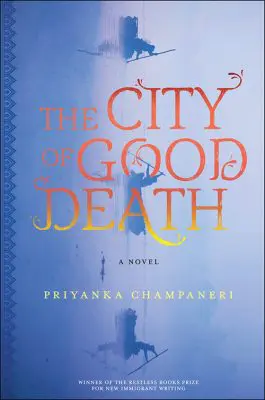
It’s a question that took me more than 10 years to answer. By the time I finished, the story I discovered was very different from the one I’d written flap copy for years before. But my intentions, from hesitant first words to sure-footed last lines, remained exactly the same: The City of Good Death is my love letter to the city, a book that I hope holds some seeds of recognition for the people who have been there, and some seeds of wonder for the people who have not.

Originally published in The Writer’s Center Magazine, Summer 2021
VARYING METAPHORICAL DISTANCE IN PROSE

By Zach Powers

I moved from Savannah, Georgia, to the metro Atlanta area with my family in 1991. Because Savannah was our hometown, we drove between the two cities six or seven times a year, every major holiday and some minor holidays and some long weekends that weren’t holidays at all. The entire trip could be completed on two interstates, I-75 out of Atlanta, picking up I-16 in Macon.

In the mid-1990s, I-16 was a stretch of road for which you had to gameplan restroom breaks. Exits appeared only at wide intervals, and there was no guarantee an exit meant a gas station. All you could be sure of on the drive was pine trees. Several trillion lined the highway, a coniferous wall broken only by the occasional farm, cotton and corn and some crops I only now realize I never properly identified.

As a sufferer of severe motion sickness, I was never able to read in the car or do much of anything except look out the window. I know that narrow swath of landscape cut across middle Georgia about as well as I know childhood backyards.

It was on these long, boring trips that I first noticed the way motion works, how nearby objects zoom past while objects in the distance seem to float by, boatlike. This is, of course, an issue of my perspective and not one of differing speeds, and I was old enough even then to know it. This realization was hardly revolutionary. I wasn’t the only kid in a car, looking out the window and wondering at the distance.

Peter Mountford observes this same phenomenon, though in a chillier climate than Georgia, in his novel The Dismal Science: “Rows of plowed mud, frozen stiff, zipped by, a pure blur in the foreground, making an orderly fan of lines farther back.”

Noting variations in motion depending on the relative location of a narrator is a useful piece of writerly craft in itself, but it seems likely it’s one most of us intuit. We never stop to think about so much of our experiences.

It’s similarly helpful to know that large objects appear to move slower than smaller objects. A 747 going the same speed as a tiny prop-driven Cessna will appear to lope through the sky in comparison. This has to do with the fact that the smaller plane covers its own length more rapidly, or so I’ve been told. If I write an extra-large plane viewed from an extreme distance, I end up with a jumbo jet that seems to hover in place. That’s a detail I’ve just imagined only by thinking about the nature of motion, and it’s a detail I quite like.

I think, however, there’s even more potential in using the gradation of apparent motion if we apply it metaphorically to other areas of craft. How can I use this idea structurally, rather than simply to write accurate or interesting details?

Writers often talk about slowing down or speeding up time, how quickly a moment goes by in relation to the number of words dedicated to it. A single second can be expanded almost indefinitely. We can span centuries in the four words “hundreds of years later.” Considering the compression of time in terms of distance, though, reveals a perhaps counterintuitive insight: Less time tends to pass per word the closer we are to the narrator’s consciousness.

As the reader, imagine yourself in the passenger seat of a car and look out the side window at the passing narrative. If the narrative occurs in the distance, we can take it all in with a broad glance, using little space on the page: “A silo slid by in the distance.”

On the other hand, try to pay attention to everything whipping by right next to the car, and we get more information per moment: “The mile marker, the untrimmed weeds, cracks in pavement like the bulged veins in my dad’s hand on the steering wheel, the way the car’s draft pushes the grass in opposition to the wind, skid marks from a semi, starting dark and fading to nothing.” Too close, and the information can overwhelm the moment, obliterating time completely.

In my second example, a bit of characterization emerges in the comment about the father’s hands. This could be expanded with more direct thoughts from the narrator. Emotions, memories, and ideas all serve to slow down the passage of time, even as these elements require more words and therefore can pick up the pace of the prose.

The car window in the previous paragraph was both literal and metaphorical, but it can exist as pure metaphor in which sparer prose styles are more distant observations and wordier styles stay closer. Continuing our ride in this metaphorical car will allow us to consider how we naturally shift our attention from object to object (or, in our case, subject to subject).

Here is a partial list of things I tend to notice on car trips: cows, JB Hunt tractor trailers (years ago my dad, who worked in freight logistics, told me they were then the largest trucking company in America and that’s always stuck with me), the same make of car that I drive, horses (especially white ones, “White Horse” being a simplistic car game passed down from my grandparents), police cars, accidents, funny place names on exit signs, weird billboards, air strips for crop dusters, those giant oscillating sprinklers in fields, old farm buildings in a state of collapse, and Waffle Houses.

Notice that in my list, some objects were given a single word or phrase, while others required some explanation as to why I notice them. From our metaphorical car window, the simple explanations are more distant observations, and the longer ones are nearby.

No distance is inherently better or more valuable than another. My attention bounces from one object to another while driving without valuation. But the bouncing itself is important. My attention shifts not just from object to object but from depth to depth. Active, engaging prose tends to do this, too.

Note in this passage from Amelia Gray’s novel Isadora how some details seem to flit by (are distant) while others stir more extended reflections from the character (are near):

“Something was off about the furniture, Elizabeth decided. The wood was so dry she could feel the desire it held for her skin’s own moisture. She wanted desperately to rub a teak oil into the dresser, as close as it sat to the sun and salt air. Cover the wood and keep it fine, that was her thought. If it were up to her, they’d oil up the desk, the armoire, and the bed frame as well. They could fit a cloth cover on the heavy oak door, another for its brass knob and the filigree on the base of the bed and the glinting pulls on the desk. It’s a sad task indeed to keep the old things nice but sadder to see them go.”

If you ever find a passage-in-progress turning stale, look to see if you’re stuck observing from a single distance, writing time at a single pace. For emotionally close moments to resonate, they generally need to be contrasted by emotional distance. A novel that always stays close to a character’s feelings can get repetitive. A brief glimpse into the distance gives the reader a needed break. Again, distance here doesn’t have to be literal. A crumb on a table can create emotional distance as effectively as a light on a dock in West Egg.

Speaking of lights on docks, distancing the attentions of your characters can automatically create symbols in your writing. Objects observed from an emotional/metaphorical distance earn significance by the very fact they stand alone. Varying distances, then, also serves to create webs of meaning. Close to the narrator, we get interpretation and elaboration. Far away, we get pure objects less tainted by authorial intent. The more a narrative varies distance, the more strands of meaning it creates, stretching between and interconnecting the literal and interpretive, and the stronger the narrative weave becomes.

The following short list of details, from Raven Leilani’s novel Luster, comes in the middle of a paragraph that consists of more reflective observations (as the narrator considers what is likely her doomed relationship): “There is a brief sunshower that curls my hair. A bird that is not a pigeon. An old white woman watching me through a slit in her blinds. I check my bank account, and my automatic student loan withdrawal has left me with thirty dollars.” These details are quite distant, two of them not even warranting complete sentences, but taken in context, they complicate the narrative web, reemphasizing her sense of out-of-placedness.

As with all suggestions in writing, varying distance is not a universal technique. There are fantastic examples of writing that stick mostly to a single distance. In Call Me Zebra, author Azareen Van der Vliet Oloomi stays close to the narrator’s streaming consciousness, the energy of which is amplified by wordplay and philosophical musings alongside rapid-fire emotions:

“We made our way to one of the food stalls and sat at the counter. Ludo ordered for the both of us while I looked through the glass display case at a row of tourists sitting at the opposite counter. I felt a palpable hatred toward them, those stupid tourists with their white-gloved inspection of the most marketable qualities of another nation, another culture, their experience purified of the painful clutter of the past, of the horrifying traces of the accretion of history. While I pasted onto my face the same vacuous grin I witnessed on theirs, Ludo ordered wine, squid, poached eggs.”

Except for the final four words, all the details come with interpretation. This creates a frenetic pace throughout the whole book that effectively mirrors the workings of the narrator’s mind. So yes, an author can stick with one distance, but I would note here that the decision seems to have been made to achieve a deliberate narrative effect. In general, the more experimental or nontraditional a piece of writing, the less any talk of craft is applicable.

Often, meaning exists in the things an author chooses not to say. Meaning arises in the gaps. The reader makes the necessary associations to have a personal, emotional experience. The primary goal of varying distance in your writing might be to create more of these gaps. There’s no need to explain why an internal thought pairs with an external observation. The reader will be encouraged to look at the space between, to follow the strand, hopping into the passenger seat of co-creation with the author, and meaning will take care of itself.

A Conversation with Philip Dean Walker about his new story collection, Better Davis

By Zach Powers

ZP: Better Davis is a sequel, or a continuation of, your first book, At Danceteria. So, you’ve been working on stories set in this cultural, historical moment—celebrities during the AIDS epidemicfor at least five years, and likely much longer. How do the newer stories differ from the earlier ones? Have you learned anything along the way in terms of research, writing, or selecting a subject?

PDW: I really have learned a lot of new things since the last book and I’m glad you asked this question. Or maybe not “new” per se but more like refinements of things I was already doing in the first book. How to research and what sources to pull that research from. One of the biggest differences, I think, is that I wrote Better Davis from beginning to end knowing that it would actually be a book. That was not the case with At Danceteria. The majority of the stories in that book were written and originally published separately. In a way, I think this new book completes the “project” started by the first book, but it really exists on its own. There was this sense in the first book of “we’ve got to have fun and party our asses off because we might all die tomorrow!” and an emphasis on escaping the epidemic by way of the thrill of the night life. The dance. Better Davis has a “the show must go on” kind of mentality and is a more direct engagement with the creative arts.

Once I came up with the driving theme of this collection, it became so easy to tie the stories together. I would say that my level of research increased for this book and became, at times, almost exhaustive. But I think that ultimately helped shape the book.

Now that I’ve read thirteen of these stories over two collections, I’m extra impressed with how you select (and imagine) your scenes. You place your celebrities in human moments. And I suspect you deliberately avoid the most obvious moments from their lives, even if those moments are close. How do you find the moments where you want to set your scenes? If it’s not a “grand” moment, what makes a scene interesting for you?

I always let the research guide me to the moments in which I want to set my scenes. Sometimes it happens very late in the research process, too. There was a small paragraph in one of the books I was reading about Michael Bennett that described a costume party that Michael and the cast of A Chorus Line attended in 1982 and I was just like, “Bam—that’s it.” Sometimes you just know, instinctually. It can also be the most ordinary scene (waiting in a doctor’s office for test results, for example) that can become “grand” when it gets dissected and sifted through. I love doing that. I always knew I wanted to set Natalie Wood’s story on the night of her drowning. There was so much I wanted to do and say in that story. A casual dinner out turned out to serve as the perfect backdrop.

These stories are all about real celebrities, but fictionalized versions of them. How do you balance research and imagination? How do you take a real person and convert them into your own fictional character?

I treat each character in these stories as I would treat any character that I was making up from whole cloth. They have to be three-dimensional. They must demonstrate all the messy emotions, bad decisions, and believable dialogue that I would give any other character. I never wanted to rely on the associations the reader would naturally bring to the story once they knew who the character was. Why my research often lasted so long was because I felt like I couldn’t write the character until I had discovered the “human” behind the “icon.” These are very boldfaced names but I never wanted to rely on cheap tricks to show the reader who the character was. The reveal that the “Elizabeth” in the story “Elizabeth/ Regina” is actually the Elizabeth Taylor mostly works because, at that point, you might be suspecting who the main character is, but she’s just having this very human moment and not, like, sashaying in a commercial selling her perfume White Diamonds or walking a red carpet at the Oscars. In that sense, I never saw myself as converting them into my own characters but really more like melding the inside with the outside persona with which we might all already be familiar. It is always such a fine balance. I’m happy to hear that I might have (mostly) struck the right chord in this new book.

After reading stories about celebrities I didn’t know as much about, I often went straight to Google to learn more about them. How do you consider your audience as you write? Do you hope your readers already have some knowledge of your subjects? Do you hope that they’ll be like me and go look up more info? Or do you hope the stories can stand alone?

Building on my last answer, I always feel like my stories should be able to stand alone. But I love the idea of people getting so invested in what they just read that they want to look up what happened to that person or read up on their lives. Every celebrity was chosen for a reason and brings their own special gaze to the book. And several of them aren’t very well known to readers, so I’m happy to bring them back to life, so to speak. Especially the ones who are no longer alive. In “Brainstorm,” I began to see myself as an advocate to tell Natalie Wood’s version of the events of that night since she’s the only one not here to talk about it. That story, in particular, became a story about domestic violence and it didn’t necessarily start out that way.

Most of the stories are absolutely about the AIDS epidemic, but also not quite about the AIDS epidemic. They’re about characters who were alive during the epidemic and influenced by it and maybe lost to it. I think that indirect approach is executed brilliantly. How do you write about a subject, but keep yourself grounded within the humanity of your characters?

I appreciate that compliment. I thought the indirect approach was oftentimes the best way into the story. No one’s life is about one thing all the time. I wanted the AIDS epidemic to haunt certain stories without ever taking center stage. I like the way you phrased that about maintaining the “humanity of the characters.” I think by not treating the characters simply as mouthpieces to deliver a “message” about AIDS is honoring their humanity. It’s so boring and obvious when writers do that. I am always beholden to the characters above all else and I think readers appreciate that and have connected with the characters because of that.

Last time we talked, you recommended that writers must write the thing they’re afraid of. Excellent advice! Do you have another piece of advice for aspiring writers?

My new piece of advice is to just take a second and recognize that you are the only “you” this world has got and your writing is singular. Don’t worry about anyone else’s “career” or book deal or Twitter following or whatever. Own the fact that you yourself are a unique, one-of-a-kind “product” and act accordingly.

THREE WRITERS ON THE BENEFITS OF WRITING GROUPS

By Amy Freeman

Writing is, of course, a solitary pursuit, which is perhaps all the more reason that writing groups are such a boon. They can meet in person or virtually, live or asynchronously. They can provide focus, accountability, inspiration, skills, or any mix thereof. I reached out to folks in different types of writing groups to talk about what each strives to achieve.

Jiadai Lin is in a group of three women who, although sharing thousands of words, live on different parts of the planet and have never met in person. Despite a bit of a recent slow-down, the group has worked together since 2017. The group focuses on editing long-form fiction.

AF: Jiadai, how did you and your partners find each other?

JL: We found each other on Facebook through a large writing/networking group. One woman (who we soon learned is a born organizer) made a post looking for novel manuscript critique partners and I responded. I’m generally shy about social media, but the timing was so fortuitous. I was starting yet another rewrite of my manuscript and struggling with returning to a non-writing day job. I needed community and inspiration (in addition to really great critique partners) and our group has provided all of that to me and more.

As strangers, how did you build trust?

I think it starts with a leap of faith. You don’t know these people but you know that they are ostensibly making a writing commitment and something about that alone places them in your community. And then real trust is built over time. It was pretty obvious from our early weeks that my partners were great writers and smart editors, but it took months of consistent emailing, feedback, encouragement, and support to really develop our writing friendship (in my inbox, I count 227 threads among us over the past 4.5 years). I think we also recognized in each other a similar attitude of being acceptive of critiques and not taking things too personally. We all wanted to be better writers. We saw the dedication that each of us put into this shared goal and I think we really developed a respect for one another along with trust.

Logistically, how has the group shared work?

For the first year or two, we shared pages and chapters from our manuscripts on a weekly basis or so. The other two women had full drafts; I was still working as I was sharing. We did everything through email, with inline comments on Google docs, and it worked well. Sharing feedback only through writing allowed us to provide fully formed and edited comments, which, as an introvert, I really liked.

We share work less consistently now, but still with such genuine enthusiasm and support. Some of us have finished our manuscripts, queried, submitted to publishers, started new jobs, moved cities, had babies, etc. We’ve all worked on other writing projects and written in other genres. We’ve been there for each other through lots of personal things that we might not even easily share with our “real life” friends. Our friendship is the best thing by far to come out of our group.

What has been the most helpful aspect of this partnership?

At first, it was the consistent critique and feedback. It was having a small writing community to help me stay motivated and working and writing. Now, it’s the friendship, which still comes hand-in-hand with community, critique, and feedback.

You’ve gotten to know each other by sharing your work, which can be an intimate experience. Yet you three could pass each other on the street and not recognize each other! If you were able to work together in person, would you want to?

Yes! But I will say that one thing that I think helped our writing group succeed is the fact that we weren’t friends in real life at the outset. There’s baggage that comes with having someone who knows you read your work. We didn’t have that; we just had shared dedication and appreciation of craft. We got to know each other as writers first, then friends. And even though we’re good friends now, I think we appreciate going into our writing mindsets and working on each other’s work from a technical perspective, which includes giving honest critiques in one paragraph and talking about our kids in the next (although all of our “talking” remains written!).

Fiction writer and essayist Vonetta Young participates in several standard-format writing groups. During the pandemic, though, she found herself in a bit of a writing rut. She tweeted as much, and someone she knew from a past writing workshop said she was in the same boat. Seeking inspiration, the two formed a loose partnership they call “Saturday, Caturday.”

AF: Ummmm, what’s with that name?

VY: Great question! We meet on Saturday mornings and we needed something to get us writing, and rhyming came to our minds, even though neither one of us is a poet. We use two words that rhyme or are homophones, just to open us up: “bar” and “guitar,” “would” and “wood,” “stair” and “stare,” etc.

How does this “group” work?

There’s only two of us, so we login to Google Meet or Facetime, catch up on life, pick our words, then get to writing. We spend 20 minutes on mute free writing, then we read what we wrote. We usually do that twice, if we have time.

Can you really create something coherent in twenty minutes?

It depends! I’ve been impressed with how coherent some of the pieces come out. Of course, they usually begin with “What am I going to write that has anything to do with these words” or something “throat-clearing” like that, but it gets the mechanism going. We usually wind up touching on something emotionally resonant eventually, getting to the heart of the piece in really unexpected ways.

Have you or your partner turned any of the sprints into finished pieces?

I’ve been able to take what I’ve started with and turn them into longer essays, or, in one case, I was able to revive a whole short story based on what I started one Saturday morning in that 20 minutes. I’m pretty sure my writing partner has published a piece or two from what she’s drafted during our time together. Even if we don’t wind up finishing something (or it is incoherent babble, which happens sometimes), we wrote something. Mission accomplished!

A poet, Chad Robinson wasn’t quite sure how to find critique partners; reaching out to strangers can be pretty daunting. Discovering that The Writer’s Center trains volunteer leaders and oversees dozens of writing groups, Chad decided to throw his literary hat into the ring.

AF: What made you decide to launch a group? What were you hoping to find?

CR: I loved the idea of a group specifically focused on poets reciting poems to the fellow group members. There are several real benefits to reading your work aloud, and I knew I personally needed a literal sounding board. I was hoping that others would have this same need.

How did the launch go?

Well, I was trying to have fun pretending to be clever by writing poems for the website’s group description. I thought a little couplet and tanka could be a fun way to introduce the group to people, but it clearly didn’t excite anyone else the same way that it excited me. After a month, I hadn’t had a single person reach out to me. There was also concern about the planned group location, so we decided to make the group an online group.

Within a week, we had the folks we needed to get launched. I’m taking this as a sign that I should probably stop pretending to be clever.

How are you and your partners deciding what the group should look like? How often to meet, how many words to share, etc.?

We are currently meeting on a monthly basis, and we had our first monthly meeting this week! It was really fun to put faces to names and words to poets.

Right now, I’m mostly struggling with how much to share about myself and how much to share with the other group members about one another. I know that this past year has been a source of some serious challenges for most of us, and I wouldn’t want to add to anyone’s anxieties by oversharing their personal information with a bunch of strangers.

So much of poetry can be deeply personal, so I can appreciate that some group members might come to the group with their guard up. For that reason, I’m also encouraging the recitation of other poets’ works. I want our group to focus on reading poetry, whether the person reciting it wrote it themselves or not. My hope is that they get comfortable enough with the group that they become ready and willing to read their own work before the group.

I was surprised by how excited I was to make sure I was working on my poems to read to the group. I was certainly excited to read some things, but the night before the first meeting I was tweaking a poem I started months ago so it would be ready. I wasn’t prepared for how the opportunity to share the work would drive me to get more done. It was truly a pleasant surprise!

By Kathleen Wheaton

It was February 2020 when Washington Writers’ Publishing House decided to put out a new fiction and poetry anthology—that is, a lifetime ago. A staff meeting at my house: everyone crowded into a small living room, barefaced, handing around mugs of tea and pretzels without thinking about who else had touched them—remember gatherings like that?

Our purpose was to introduce the 2020 WWPH Fiction Prize winner, Adam Schwartz, and the 2020 Jean Feldman Poetry Prize winner, Steven Leyva, to the other members of the press. In addition to having submitted stunning manuscripts, both Steven and Adam seemed like good folks, which is a plus when you’re a part of a cooperative.

WWPH was founded by hippies—their word, not mine—in the mid-1970’s, when four DC poets got a National Endowment for the Arts grant to start a nonprofit publishing house. Their idea was that the poets they published would then volunteer for the press: “poets working on behalf of other poets” was their visionary motto. Their book distribution method, known as Drop-and-Split, involved sneaking into bookstores, squeezing freshly printed volumes onto the shelves, then dashing out to a waiting getaway car.

Despite obvious flaws in the business plan, WWPH has persisted for almost five decades, publishing more than 120 volumes of poetry and fiction. Nowadays, our books are sold in bookstores, not planted like revolutionary pamphlets. And yet much remains as the founders dreamed. The staff is still all-volunteer, comprised of previous winners of an annual blind-judged contest open to writers and poets living within 75 miles of the Capitol. The press functions a bit like a long-running group house, with inevitable hitches but a sense of common purpose. Some people fulfill their two-year responsibility and move on; others—like that guy on the third floor who knows how the boiler works—have been around forever.

It’s a nice community, for one thing. Temperamentally and/or vocationally inclined towards introversion, writers often don’t realize they need a community until one is thrust upon them. Though because the press is small, with barely the human and financial capital to put out two books a year, it can—like a group house or an island nation—become insular.

In 1995, WWPH broadened its reach with an anthology, Hungry As We Are. The 122 DC-area poets gathered in that volume represent a poetic Who’s Who of the late 20th century; the poems themselves—referencing Latin American wars, the fall of Communism, the Oliver North/Fawn Hall scandal—make it very much a portrait of its era.

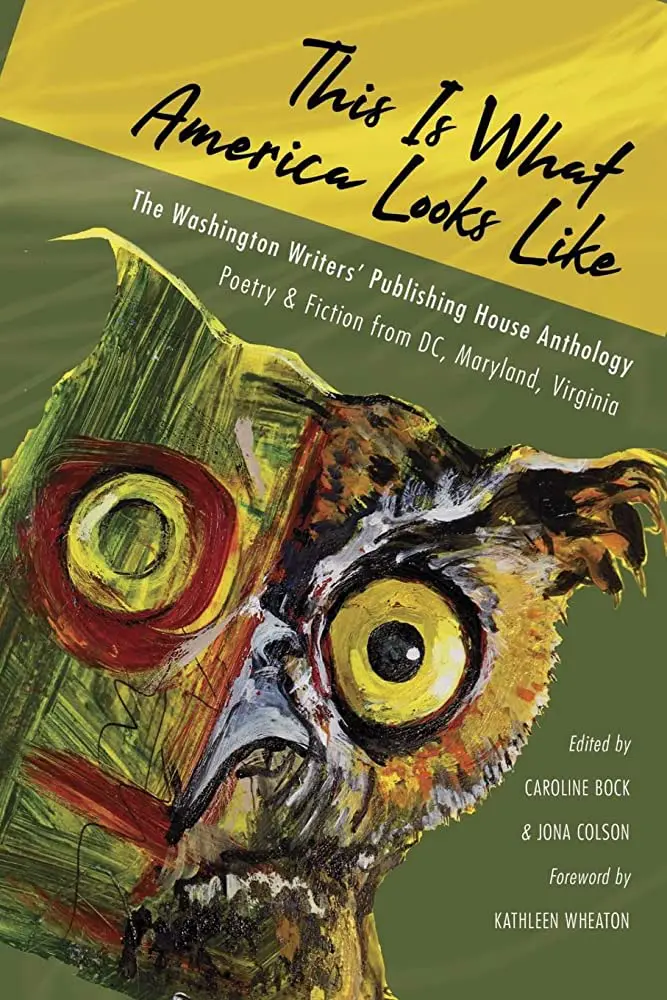
It was at the meeting last February that 2018 Fiction Prize winner Caroline Bock suggested it was time to put out a new anthology. She already had a title in mind: This Is What America Looks Like, the chant that had echoed through the January 2017 Women’s March following Trump’s inauguration. Like the march itself, this anthology should be diverse, inclusive, big, joyous. It should contain both poetry and fiction. We should expand our geographical boundaries to include all of Maryland and Virginia. We should have an eye-catching, colorful cover.

The proposal sounded so right, so optimistic. Financially, we felt as on firm footing as a shoe-string operation ever does: we had events planned for Steven and Adam’s books at Politics & Prose in DC and The Ivy Bookshop in Baltimore, as well as at The Writer’s Center. We agreed to suspend the regular contest for a year to accommodate the work and money the project would consume. The 2018 Poetry Prize winner Jona Colson joined Caroline as the anthology’s poetry editor, and they put out a call for submissions.

It was maybe like planning a group photo in a meadow before a plague of locusts descends, followed by a hurricane. Two weeks later, the world went into pandemic lockdown. A handful of submissions trickled in. Then came the police killing of George Floyd in Minneapolis, the Black Lives Matter protests. The trickle of manuscripts dried up. In times like these, we wondered, maybe the whole idea of a literary anthology was frivolous. Maybe we should scrap it altogether.

Hours before the deadline, there came a flood of submissions. “I was astounded and gratified the way the prompt, This Is What America Looks Like, resonated,” Caroline Bock says. “Writers were taking on the big issues of death, of social justice, of the pandemic, of the daily, grinding frustration of our divisive political times.” We had flash fiction from homebound parents and frontline medical workers; poets exploring loneliness and loss in real time. We got new work from writers we admired, pieces by emerging writers for whom the anthology would be a first publication.

“The best thing about editing this anthology was being able to read all the poems that were submitted,” says poetry editor Jona Colson. “Some were more experimental in form and required closer readings. Other poems were more traditional and had a clearer narrative. I didn’t find that a particular style worked better—and actually, having a narrow range of style was something I wanted to avoid.”

Working on a collaborative project in lockdown presented its own problems, Caroline says: “With the pandemic, we couldn’t meet in person. We couldn’t spread out all the work on the table. We had jobs, our families, partners, pets to worry about in addition to this quixotic literary task. We had to trust one another and the words, our own and the writers we accepted.”

In terms of production, almost everything that could go wrong did, during this annus horribilis—delays along supply chains and with the postal service. After the January 6 riot, the Library of Congress closed, briefly halting the issuing of its publication data. Compared to the violence and terror experienced in the Capitol, this was minor, but it wasn’t nothing. It was another reminder of the fragility of institutions we’d taken for granted, before.

It was sheer luck that This Is What America Looks Like made its publication date, February 2, 2021—again, by hours. Contributors didn’t yet have books in hand on February 5, when The Writer’s Center hosted a virtual launch for the anthology. But many attendees ordered copies, and for that we were deeply grateful. Like restaurants, small presses depend mightily upon being able to show people a good time. At a reading, attendees laugh, maybe sniffle, and are moved (okay, maybe there’s subtle peer pressure) to meet the author and buy a book. Getting back into local bookstores, into festivals and neighborhood book clubs, will be crucial to our survival.

At the same time, This Is What America Looks Like has thrown open the doors and windows of WWPH, and we’re determined to keep them that way. We plan to publish new short stories and poetry bimonthly on a revamped website. Having learned to work and collaborate over Zoom may mean that we can expand our geographical boundaries permanently. We cast a wide net with this anthology having no clue what was about to befall us. That it came together is thanks to the alchemy of community, and we want to ensure that the voices gathered will be heard again, loud and clear, in the post-pandemic world.

Kathleen Wheaton worked for 20 years as a freelance journalist in Spain, Argentina, Brazil, Mexico, and Bethesda, and now interprets Spanish and Portuguese for Montgomery County Public Schools. Her fiction has appeared in many journals and three anthologies, and she is a five-time recipient of Maryland State Arts Council grants. Her collection, Aliens and Other Stories, won the 2013 Washington Writers Publishing House Fiction Prize. Since 2014, she has served as president and managing editor of WWPH.

Originally published in The Writer’s Center Magazine.