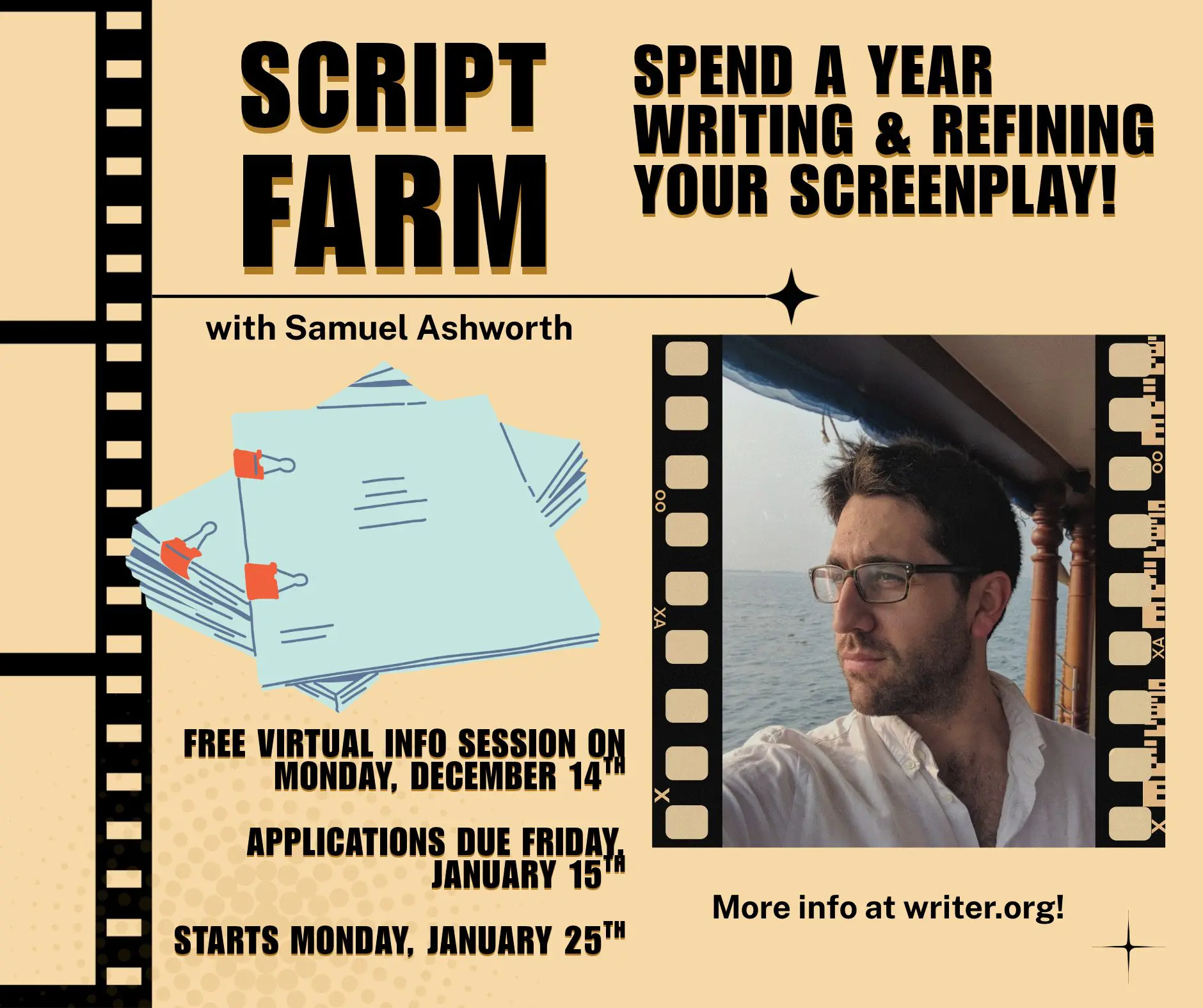

Write and refine your screenplay in a year!
Of all the forms humans have created to write stories, the screenplay stands alone as the strangest and most unnatural.
- Where novels and poems and memoirs are read by an audience, screenplays are read by everyone but the audience.
- Where other literary forms are solitary, screenplays are collaborative.
- Where other forms are published and sold, screenplays are sold and (almost) never published.
- Where other forms represent the totality of the final product—a poem is a poem, a novel a novel—screenplays represent just a piece of it.
- Where other forms’ writers take full credit for and control over their work, screenwriters get little credit and (almost) no control.
- Where most literary forms demand original stories, screenplays value adaptation of existing ones.
- Where other forms are constrained only by the author’s imagination, screenplays are constrained by budgets, technical limitations, and just about any other problem you can imagine.
Despite this—or indeed, because of it—screenplays can also be the single most exciting way to tell a story, because screenplays are at all times focused on the audience. In this course, we will explore the craft and technique of screenwriting with a view to developing film scripts that are both entertaining and emotionally powerful. We will study scripts from a variety of genres to learn different approaches to plot structure, character, and dialogue. We’ll drill down on the rules of formatting—and learn how to bend them.
Attend the Virtual Info Session
Monday, Dec. 14, ZOOM, 8pm ET
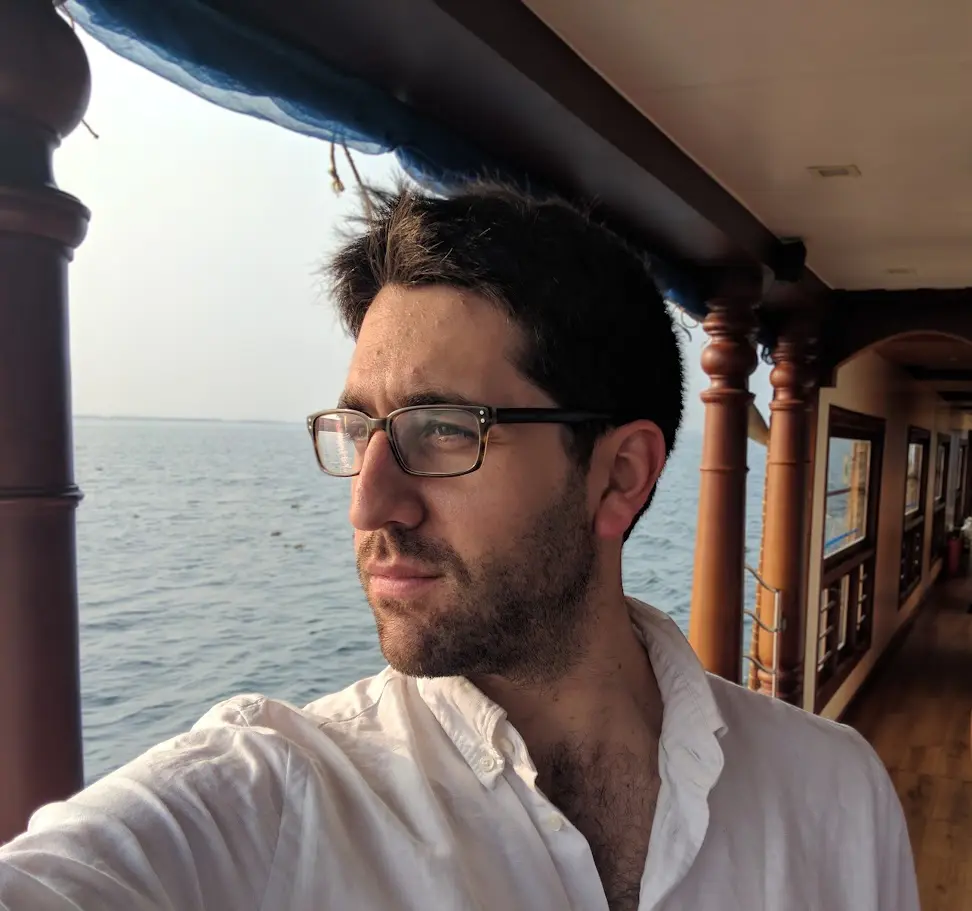
Meet Samuel Ashworth, instructor for our Script Farm workshop, and have all your questions about the program answered!
FREE RSVP >>>
In this course, students will learn to:
- Write a treatment and step-outline for a feature film or pilot
- Master the software used by professionals
- Deploy a wide range of storytelling techniques on screen
- Engage with conventions of genre, dialogue, action, and other core film elements
- Give notes to others and receive notes ourselves
- Write and revise TWO full screenplays
- Understand the broader road map of film production
Importantly, a screenwriter’s job is much more than drafting scripts. It also means handling notes, punching up scenes, and often rewriting the work of others. To that end, we’ll also spend large amounts of time workshopping, learning to give and take notes, and revising.
You should take this workshop if:
- You’ve never written a screenplay, but always thought it might be cool
- You’ve tried to write a screenplay, but weren’t sure how to proceed
- You’ve written other works of fiction and would be interested in adapting them
- You have a story you’ve always wanted to tell
Classes will fall into three types:
- WORKSHOPS: we will read and give detailed notes on student work. Students will read one another ’s work in the breaks between courses and come ready with critiques.
- CRAFT LESSONS: Sam will lecture and show clips, leading to a general discussion based on the lecture and the reading/viewing assignments. These discussions will be built around students’ specific questions about their scripts.
- 1- on-1 CONFERENCES: Sam will meet students individually in breakout rooms while the rest of the class participates in craft exercises and structured support.
- Most classes will involve 30 minutes of generative writing at the end.
The goal of this course will be to compose and extensively revise TWO full feature scripts. These can be original OR adapted. Because writing directly in screenplay form is counterintuitive, especially at first, we will begin with treatments OR step-outlines, then use these as roadmaps for writing the script.
Schedule
Classes will meet on Monday evenings via zoom from 8pm – 10pm ET. Exact dates subject to change with advance notice.
Jan 25
Feb 8
Feb 22
March 8
SPRING BREAK
April 5
April 19
May 3
May 17
May 31
June 14
June 28
July 12
July 26
SUMMER BREAK
August 23
Sept 13
Sept 27
Oct 18
Nov 1
Nov 15
Nov 29
To Apply
Application Deadline: Friday, January 15, 2027
To apply, please submit a cover letter describing your background and the project(s) you have in mind. You are welcome to submit 10 pages of any screenplay currently in progress, but it is not required. Send your submission to emily.holland@writer.org by the end of the day on Friday, January 15th. Admissions will be on a rolling basis so participants are encouraged to submit early.
Acceptance into the workshop is required before registering.
About Book Farm @ The Writer’s Center
The Writer’s Center hosts a series of workshops for serious writers to complete book-length projects, generate new work for publication, or master the elements of craft within a specific genre. You’ll work with an acclaimed author, guiding you through 4-12 months of lessons, workshops, and revisions. Our instructors are all accomplished educators with a track record of student success. Limited enrollment with rolling admission up to the application deadline, so apply right away to secure your spot!
All Book Farm participants receive an exclusive tote bag, a craft book recommended by the instructor, and a $100 gift certificate good toward future TWC workshops. Participants also receive exclusive access to The Writer’s Center staff, all of whom are accomplished writers with extensive experience in editing and publishing.