The Story of a Debut Novel

By Dina Brumfield

I wanted to be a writer as a young child. That was a world away both in place and time. My family and I then lived in Shanghai, China when the country was still closed to the world.

It was a hot summer night when the seed was planted. My father brought home a battered copy of The Count of Monte Cristo by Alexander Dumas. He started reading, or rather narrating, to my sisters and me. At the time, the Chinese Communist government had banned the book and almost all the other books, except Mao’s red-book of his official writings. It had taken my father a lot of effort to score a copy that had survived purges and book burnings. The story was so fascinating that I couldn’t wait for my father to come home from work every day to continue. I thought it’d be wonderful to write a tale like that.

I moved to the United States in 1989 when I was in my early twenties. Though I still vaguely harbored the dream to be a writer, I also told myself that writing in English, the language in my adopted homeland, is like fighting someone with one hand tied behind my back. I had no formal training in the language. English is such a difficult language, and its subtlety is hard to comprehend for an immigrant like me.

However, the dream persisted and my husband encouraged me to give it a try. Luckily, I live in Bethesda. I did some research and found The Writer’s Center was a few minutes from my home. I enrolled in a basic fiction writing class. That was in 2007. I remembered how I struggled for two weeks to write a two-page scene. Those two pages later became part of the second chapter of my book, Unbound, a Tale of Love and Betrayal in Shanghai. Though it was poorly written, my instructor told me that my writing had merit. Some of the classmates asked me to join their writing group. I gladly agreed and we met regularly. It was in the lower level of The Writer’s Center with my writing friends that I shaped up my novel.

The rest is history. My novel was finally published on August 4, 2020. It’s now in every Barnes & Noble within 25 miles of Bethesda. What I learned in the classroom (I took many courses and learned an enormous amount) and in the discussions at The Writer’s Center nurtured the seed buried deep inside of me. It made my dream come true.

A conversation with First Novel Prize winner Jasmin Darznik

By Grace Mott

Remember the flight, for the bird is mortal. —Forugh Farrokhzad

This year we’re honored to award Jasmin Darznik the First Novel Prize for Song of a Captive Bird. This debut work of fiction is a truly unforgettable story set in 1950s Iran and told from the perspective of Forugh Farrokzhad, who is a real Iranian poet that lived from 1934-1967.

In this fictionalized account told from Forugh’s perspective, we are given an intimate look into Iranian society through the eyes of a woman who fearlessly rejects the strict demands forced upon women during the years leading up to the country’s revolution. Despite everything working against her—an oppressive marriage, a demanding family, an unforgiving society—Forugh publishes her controversial poetry and suffers the consequences of refusing to be silenced.

Forugh remains a cultural icon today and is personally significant to the author, who was born in Iran and moved to the US at the age of five. Thanks to Song of a Captive Bird, English speakers are now able to read stunning translations of Forugh’s poetry that, along with the book’s beautiful prose, pull us into the setting of its creation.

I spoke with the author about her writing process, her inspiration, and her motivation to share Forugh’s life with those who have yet to know and appreciate her legacy.

GM: How would you describe your personal connection to Forugh, and what led you to write from her point of view? Was there a single instance that inspired you to write her story, or did the inspiration develop gradually?

JD: Forugh’s last book of poems was the one book my mother brought to America in 1979. Her work energized and inspired so many Iranian women, so

I’d long had a fascination with her. There are many myths about how she died, and I wanted to write my way to an answer—or at least a theory. Since Iran can seem foreign and forbidding to American readers, I knew a first-person narrator could bring Forugh closer, faster. It also helped me really dig into her story, telling it from the inside out.

I was eager to learn more about Forugh after finishing the book, and was surprised to find very little written about her online. Could you tell us a bit about filling in those gaps of information and what the research process was like? Were there any particularly memorable moments of discovery?

There’s a quotation by the German writer Novalis that comes to mind: “Novels rise out of the shortcomings of history.” What often most intrigues me about biographies is all they leave out. Iranian history is full of untold stories. Given the enormous weight of censorship and self-censorship, biographers and historians have not been able to write the full story of women’s lives in Iran. As a novelist, you can delve right into those silences. For instance, when I discovered she’d been imprisoned during the uprisings in 1962 in Iran, there were few details about the episode, but it became a major plot point in the novel, one that revealed a great deal to me about the persecution of artists and writers as well as their response to that persecution.

Did your connection/relationship with Forugh change at all during the writing process? What, if anything, was different for you after completing it?

By writing the book I had to see her as a woman, not an icon. What were her days like? What did she think about when she wasn’t writing? I still have a feeling of reverence for her poems, but I understood better the soil from which they emerged—and it’s not so different, I think, from the soil that makes up many people’s hurts and hopes and fears. She wanted to be seen. She wanted to express herself. We’re all driven by these desires. Writing the novel made me see that.

How do you manage the interplay of fact and fiction when developing your characters?

I had a rule for myself, which was that I could not make up anything that was dissonant with something I knew to be true or false. If Forugh loved someone in real life, for example, I couldn’t make her hate them in the novel. I did invent characters and scenarios, but I sought to keep them consonant with the truth.

How would you describe what remains today of Forugh’s work and legacy, especially in the collective memory of Iranian society?

Forugh is a legend in Iran. She embodies the stillunrealized dream of democracy, feminism, and human rights in Iran. Young Iranians have embraced her with as much passion as earlier generations. Her longing to be free, to live and write as she pleased, remains deeply relevant. As a consequence, her poetry’s been continually censored since the 1979 Revolution. In fact, she’s still such a lightning rod that thousands gather at her gravesite on the anniversary of her death. When Song of a Captive Bird was published in Iran, her name was not included on the cover or jacket material because it likely wouldn’t have made it past the censors. She’s still that alive in the Iranian consciousness.

What is your writing process like? Do you have a daily routine?

On days I’m not teaching I keep regular hours, 9am-3pm. In the evenings I will sometimes dip back into the research. I’m constantly reading novels when I’m working on my own. It’s an essential part of keeping my brain in a creative mode. I am an obsessive editor.

When I’m in the later stages of writing something I can work eighteen hours a day, no problem. That pace is totally unhealthy and unsustainable, but for short bouts of time it’s bliss.

Who are some of your favorite writers? Favorite books?

I love Sarah Waters’ novels, especially Tipping the Velvet. She’s got an extraordinary eye and ear for period detail. Paula McClain’s The Paris Wife has been a huge inspiration to me in the realm of historical fiction. I probably read as much creative non-fiction as I do nonfiction—I truly believe we’re living in a golden age of memoir and biography. Maxine Hong Kingston, Vivian Gornick, and Rebecca Solnit are writers I go back to often, both for their fierce visions and glorious prose styles.

What advice would you give to someone writing their first novel?

It’s important to trust your instincts. If something interests you, do not let it go. Let it obsess you. I think I’ve found my most interesting stories when I’ve allowed myself to pursue odd or errant threads. It can be a very small thing, but if you can’t get it out of your head, it’s a good sign you’ve found something good.

By Emily Holland

Steven Leyva was born in New Orleans, Louisiana and raised in Houston, Texas. His poems have appeared or are forthcoming in 2 Bridges Review, Scalawag, Nashville Review, jubilat, Vinyl, Prairie Schooner, and Best American Poetry 2020. He is a Cave Canem fellow and author of the chapbook Low Parish and author of The Understudy’s Handbook, which won the Jean Feldman Poetry Prize from Washington Writers’ Publishing House. Steven holds an MFA from the University of Baltimore, where he is an assistant professor in the Klein Family School of Communications Design.

Ahead of our Craft Happy Hour chat with Steven Leyva, we talked with him about the journey from manuscript to publication, working with a small co-op press, and the importance of finding a writing community. This interview has been edited for style and clarity.

EH: I remember your Cafe Musé reading a little over a year ago, and you mentioned that you were sending out the manuscript for publicationcan you walk me through the process of creating this book? How long have you been working on these poems? How long was the manuscript out for submission?

SL: The earliest poems in this manuscript were written around seven years ago. And there were several things that I experienced or that I had the opportunity to participate in during that time. One of the things that I was doing at the time is that I had finished my Cave Canem fellowship. Some of the poems in the manuscript began at the Cave Canem retreat.

I also was able to go for a month to the Vermont Studio Center and do a residency up there, so there are many poems in the manuscript that I wrote while I was in Vermont. And that was great. There was a whole community of writers and visual artists all interacting with one another. It was definitely one of those things where the environment was so stimulating that I know I carried that back when I went to my studio there to write. A lot of that energy was already churning, and it helped me to produce a lot of new work.

I would say that in terms of sending it out, I probably sent it out in this current form for about two years. I resisted some changes that were actually really important changes that came from feedback from mentors and friends that really helped me to kind of get over the hump. Some of it was just I was probably letting my frustration with the book not being selected affect my ability to see where it could grow and get better. It was a semifinalist for the New Issues Press first book prize, so there were a couple of things like that happening in between that were affirming, but nothing is as affirming as someone telling you yes to your manuscript, so I was really excited when I got the call from Washington Writers’ Publishing House.

Right, it’s kind of like getting those warm rejection letters where it’s nice that it isn’t a straight rejection, but you really wanted that acceptance.

Yeah, rhetorically it’s the same. We tell ourselves the narratives to not fall into despair. But really I think what might actually be more useful, and obviously I’m not a counselor or a psychologist, but something that’s been useful for me is to simply acknowledge that the narrative of having “tough skin” is a failed one. You can’t have tough enough skin. A rejection is always going to affect you. So why not just let it affect you a little bit so that you can move on? Rather than pretending that there are these strata or hierarchy of rejections. Just feel what you gotta feel and keep moving. I’m not trying to set up anything prescriptive for anyone, rather that that’s a paradigm shift that helped me as the rejections piled up. Although there weren’t an overwhelming amount of them. I probably undersubmitted, I would say.

You mentioned kind of resisting some changes to the manuscript that maybe ended up helping it get accepted. Could you talk about that transformation in yourself, as a writer?

I don’t know that there’s a direct relationship between the changes I made and the acceptances, but I do know that the manuscript overall was better, so we might draw that correlation. Essentially, what I think I had to let go of is a narrative that I did it all on my own. There’s a pervasive and kind of insidious sort of thing to be able to say, whether implicitly or explicitly, that “I did it all out of my own genius” or, you know, “it was my great ideas, it was my hard work, I just stuck at it” and sometimes obscuring the ways that people have helped you.

I think that people were trying to say things like “Hey, I think you should change these section titles.” I had all these Greek theatre terms for section titles and several folks giving me feedback were like “I don’t know if these are the right ones, here are some reasons why.” I had a friend, Cynthia Manick, who’s got a fantastic book Blue Hallelujahs, who sort of reached out to me and said, “Hey, I’ll give you a manuscript review for free because I can tell that you’re really in the weeds with this.” And she made some similar suggestions that I’d heard before, but I think I had begun the process of not being afraid to ask for help and not sort of trying to guard my own ego there. Ultimately, I said to myself I would rather have the book picked up than I would have the narrative that I did it on my own.

I don’t need the sort of false, fierce independence, you know? Community helped me, which is I think mostly true for how many people get their manuscripts picked up. They get introduced to an editor at a party. Somebody recommended them. They met somebody at a retreat. It’s a lot of that interpersonal interaction that, from the outside, can sometimes be deformed into a sort of nepotism, like everything is this rigged system, but it really isn’t that. I think the better way to say it is that relationships play a role in the way that people find your work. So you can’t be an asshole and then expect that to somehow not play a role in how people find and engage with your work.

So I was kind to people, I’m a generally affable and kind person, so it wasn’t really that. It just simply was that I think I might have been trying to manage my frustrations by holding tight to this value of wanting people to see my hard work rather than letting the previous work of relationships help me to do hard work.

I’m thinking, too, about the structure the Washington Writers’ Publishing House has, that kind of co-op where previously published authors help run the press, and how that forms its own kind of community. What was the process like working with them as a publisher and seeing the book go from accepted to now printed?

It’s really been a dream working with Washington Writers’ Publishing House. They’ve been very, very good to me. One of the things I think that the co-op and collective structure of the press allows for is that I had a lot of autonomy in making some choices about the book that at another press I might not have had.

For example, I got to pick my own cover designer and I chose to work with someone who I knew from grad edition of school whose work I really, really enjoyed. His name is Writer’s Andrew Center Sargus Magazine Klein, and he works for the Enoch October Pratt Free 10, 2020 Library here in Baltimore City. Being able to have a dialogue with somebody who I already had a relationship with I think helped the process of getting a cover that I thought was unique and representative of the book and interesting and kind of evoked curiosity.

The idea that everybody on the press who’s working in an editorial role is also a published author on the press I think lends itself to allowing for greater autonomy to happen along the production process.

But also I just got really good and attentive editorial feedback about how to polish the manuscript from what I submitted and what was selected for the Jean Feldman Poetry Prize into what became the final thing we sent to the printer. There was just a lot of wisdom I think born of a deep and sincere belief in the artistry of the book, not simply in just how much money the book might make. Which for poetry is always nebulous anyway.

They believed in the poems, and I knew that that belief was born out of their own engagement with writing poems themselves and writing fiction. I couldn’t have been happier. They were excellent to work with and the right fit for my quirky little book and my sensibility. It felt like an easy home to be welcomed into, and I felt very welcomed at every stage of the process.

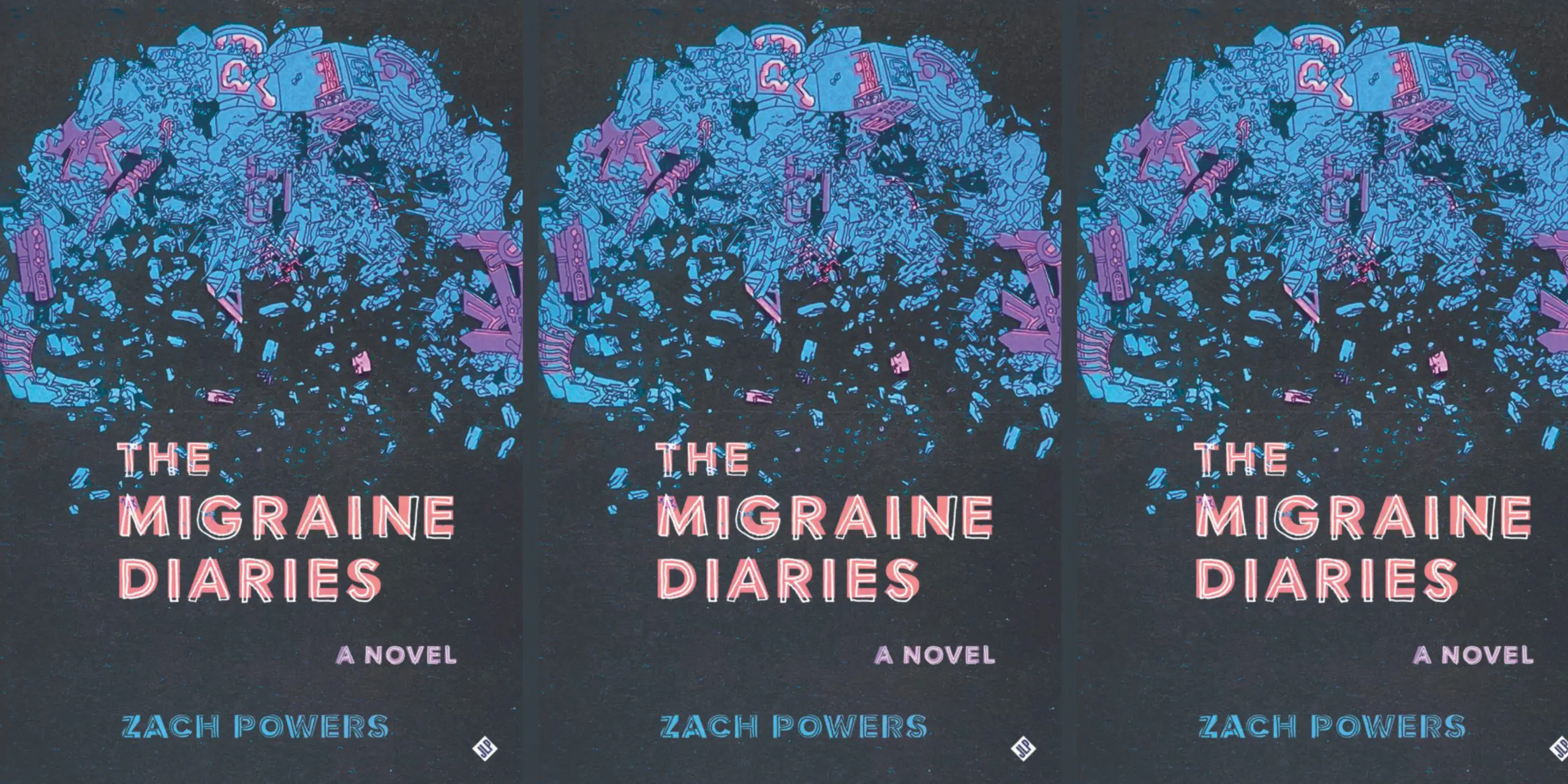
By Zach Powers

DC-based author Morowa Yejidé joined The Writer’s Center for a chat about her forthcoming novel, the craft of writing, and the inspiration of our city.

ZP: My favorite literary genre (using that term loosely) is the fantastical. What draws you to imagined and magical places?

MY: DC is a place where people live out their lives, where all kinds of forces are at play. I wanted to write a story about the unseen Washington. I think DC is a landscape like no other because it is a place where the terror and wonder of life exist side by side, where hidden realities lay just below glittering myth—the perfect conditions for the fantastical. Creatures of Passage depicts the paradox of DC with both real and imagined places. With real places, the magic is in how DC is experienced or perceived (the city quadrants, rivers, and bridges). With imagined places in the book, the magic is in how DC is experienced through the mythology of that setting—as in the Isle of Blood and Desire (Anacostia) or the scrap yard.

My family came to Washington, DC, from the South at the turn of the twentieth century. I imagine the leaps of faith taken, the great triumphs, and the losses suffered. My grandmother was among the first female cab drivers in the city, one of three. The early seeds of what became Creatures of Passage grew out of wondering about the people who got into her car, the stories attached to the places she took them, and the kind of fortitude it must have taken for her to drive through the adversities she endured. The interior of the car in the book is the ultimate imagined “place”—a motif for the mystery of people traveling from one place to another, moving from one generation to another.

I was struck by how well you deploy various methods of characterization. In the first chapter we learn so much about Nephthys from the physical space of her apartment. In the second chapter there’s a paragraph that describes typical reactions people have to Amber. Is this indirect characterization something you strive for?

I think layering a story with multiple views of a character, dropped in bit by bit as we move through the book, adds a kind of richness and mimics how people are often viewed through the eyes of others. It can also have a kinetic feel as the reader realizes something about the character from another character’s point of view that then shifts, but deepens, how they look at that character’s actions/ purpose. I love to use physical spaces to cue a character’s internal world and state of mind—like in the case of Nephthys in her cluttered apartment “lair” or Amber in her house “at the bottom of the hill at the edge of the world.”

You’ve got a deep-diving third person omniscient narrator. Why did you want access to all these characters’ thoughts as you wrote?

I’ve always loved the omniscient point of view because to me it is just one more landscape alongside setting and time to be used to paint the picture of the story. Omniscient can feel unlimited and I love that sense of freedom. I use it as a tool to deliver a view into the mind in doses, in freeze-frame revelations dropped into the mix of the happenings at a given point in the story. A character’s thought at a moment in time within a situation can add marvelous layering to what drives or holds back that character as the story moves. So the character’s thought is a kind of lens that I use to scope in and out—where I invite the reader to know something that the character knows or to bear witness to what the character doesn’t yet realize. I think it heightens the mystery and drama of the storytelling and adds depth to how that character processes a situation and looks out at the world.

How do the different points of view interact? Are there any deliberate steps you took during writing or revision to make sure different chapters spoke to or against each other?

The concepts I built that drive the story help me set the rules of engagement in how the characters interact. Each chapter that frames a character is conceptually driven, and I can therefore move them around in my mind to set them against each other or create symmetry between them. For instance, the watery blue realm of Nephthys in her car is set against the fiery red realm of her brother. I like my stories to read like a hologram—where depending on how the reader “turns” there are complementary or opposing scenes, tones, and themes. Similarly, the chapter circumstance is the looking glass through which a character sees and experiences the happenings in the book (murder, molestation, searching, running, reconnecting, discovery). But I use the conceptual themes of the story and the various character arcs as my compass for how the storytelling is constructed and what drives each plot line to its end.

How do you maintain such a consistent tone throughout? When did the tone form in the writing process?

I usually set the tone of a story from the onset of the concepts that inspire me to write the story. I am very image driven in my storytelling. In Creatures of Passage, the color spectrum was also part of the tone—with varying shades of blue being the predominant because our story’s heroine is a cab driver of sorts, ferrying people around the “waters” of life. Language can be a tremendous aid in setting tone. For example, the “symbiotic language of twins” in the book is the Gullah language of the Sea Islands of Georgia and Carolinas where two of the characters come from. I also used a specific taxonomy to invoke tone and connotation throughout, where the White House is described as the “Acropolis,” the country as “the territories,” and the surrounding states and counties are “kingdoms and fiefdoms.”

What makes good writing about trauma? All the characters are living through and/or inflicting trauma, ranging from the everyday to violent. As a writer, how do you craft scenes of trauma that explore but don’t exploit these occurrences?

I think with writing trauma, the author has to decide when the eye stares, blinks, or turns away. I have found that adding trauma in specific places and cutting the trauma scene off at a very precise moment or “fading to black” can heighten the effect when read because the reader then fills in the rest of the “happening” with his/her own imagination based on the clues they’ve already been given. At the same time, I chose specific chapter scenes where the unblinking eye is trained on what the act conveys within the larger context of the characters’ lives and the story. To me, that mix between the said and unsaid, shown and not shown, is where the reader bears witness to trauma with more layers and nuance—which can actually “feel” even more ominous and terrible, and perhaps give deeper understanding to the scope of the trauma and what it means within the story.

Finally, what’s one piece of advice you’d give to someone working on their first novel?

As you write that novel, realize that there is no “writing life.” There’s just your life and how writing fits into it. There’s only your story and how you tell it. Hammering at your book may not be easy but realize it’s worth the fight because only you can make it the story it’s meant to be. And that means you’ve got to be willing to climb that mountain when you sit down to write. Every word. Every day.